When faced with an emergency water situation, knowing how to respond effectively can make all the difference. You’ll need to assess the damage, ensure safety, and swiftly remove standing water to minimize further issues. Each water removal step requires careful attention to detail and the right techniques. But without a clear plan, you risk complicating the recovery process. Let’s explore essential strategies that will guide you through this challenging situation.
Key Takeaways
- Identify the water source and assess the extent of damage to document affected areas and items needing replacement.
- Ensure safety by shutting off utilities and wearing protective gear to avoid hazards during water removal.
- Use high-capacity pumps and wet/dry vacuums to remove standing water efficiently from affected areas.
- Clean surfaces thoroughly with sanitizing products and ensure areas are completely dried to prevent mold growth.
- Inspect for structural damage and consult professionals for comprehensive assessments and assistance with recovery and insurance claims.
Assessing the Situation
When facing water damage, how can you accurately evaluate the extent of the situation? Start with water source identification. Pinpoint where the water is coming from—whether it’s a burst pipe, roof leak, or flooding. This step’s essential, as it guides your next actions.
Next, employ damage evaluation techniques. Look for water stains, warped walls, and damp flooring. Use moisture meters to gauge hidden moisture levels in walls and ceilings. Document your findings, noting both visible damage and any potential hidden issues, as this will provide a clearer picture of the overall impact.
Don’t rush; take your time to confirm nothing is overlooked.
Ensuring Safety Precautions
Prioritizing safety is vital during emergency water removal. Before you start, assess the area for any potential hazards. Water contamination can occur from sewage, chemicals, or electrical sources.
Wear protective gear, including gloves, masks, and waterproof boots, to safeguard your personal safety. Make sure you have proper ventilation in enclosed spaces to avoid inhaling harmful fumes.
If you notice any signs of contamination, refrain from wading through the water without appropriate protection. It’s important to stay aware of your surroundings and any structural damage that could pose a risk.
In case of extreme conditions, don’t hesitate to evacuate the area and call professionals who specialize in water removal.
Shutting Off Utilities
When dealing with water emergencies, it’s essential to shut off your utilities to prevent further damage and ensure safety.
Start by identifying the locations of your utility shutoffs, including water supply and electrical services.
Taking these steps protects your home and helps create a safer environment as you begin the recovery process.
Identify Utility Shutoff Locations
Have you ever wondered where to find the utility shutoff locations in your home? Knowing these spots is essential during an emergency.
Typically, water shutoffs are near your water meter, while gas shutoffs are near the gas meter. For electricity, locate the main circuit breaker. If you’re unsure, consider using utility locator tools to pinpoint these shutoff valves effectively.
It’s also wise to keep your emergency contact information handy, including local utility companies, in case you need assistance. Familiarizing yourself with these locations ahead of time empowers you and fosters a sense of community safety.
Turn Off Water Supply
In the event of a water emergency, knowing how to quickly turn off your water supply can considerably minimize damage to your home and belongings.
Locate your main water shutoff valve, typically found near the water meter or where the main line enters your home. Familiarize yourself with its operation; it’s often a simple quarter turn to the right.
If you encounter a leak or burst pipe, act swiftly to activate the emergency shutoff. This critical step helps protect your property and gives you peace of mind.
Remember, it’s always better to be prepared—consider labeling the valve for easy identification later.
Disconnect Electrical Services
As soon as you realize there’s a water emergency, disconnecting electrical services becomes essential to ensure your safety and prevent further damage.
Start by locating your main electrical panel and turning off the power to avoid electrical hazards. If water is pooled near outlets or appliances, never enter the area without shutting off electricity first. This action protects you and minimizes the risk of severe damage to your home.
If you’re unsure or uncomfortable, don’t hesitate to call a professional. Remember, prioritizing safety is vital during these stressful times.
Once you’ve managed the water service, you can focus on recovery, knowing you’ve taken the right steps to protect yourself and your loved ones.
Removing Standing Water
Once you’ve shut off your utilities, it’s essential to assess the extent of the water damage.
You’ll need the right tools and equipment to effectively remove the standing water while keeping safety as a top priority.
Let’s explore how to tackle this situation methodically and ensure your space is secure and dry.
Assessing Water Damage
How can you effectively assess water damage after a flooding incident?
Start by identifying the extent of the water damage. Walk through the affected areas, noting visible signs like discoloration, bubbling paint, or warped flooring.
It’s essential to perform a thorough water damage assessment to understand how deep the moisture penetrated. Use moisture detection tools to measure humidity levels in walls and floors.
Check hidden spaces, such as under cabinets or behind appliances, where water might linger undetected.
Remember, early detection can prevent further complications like mold growth.
Don’t hesitate to reach out for professional help if you’re unsure; you’re not alone in this situation, and support is available to guide you through the recovery process.
Tools and Equipment
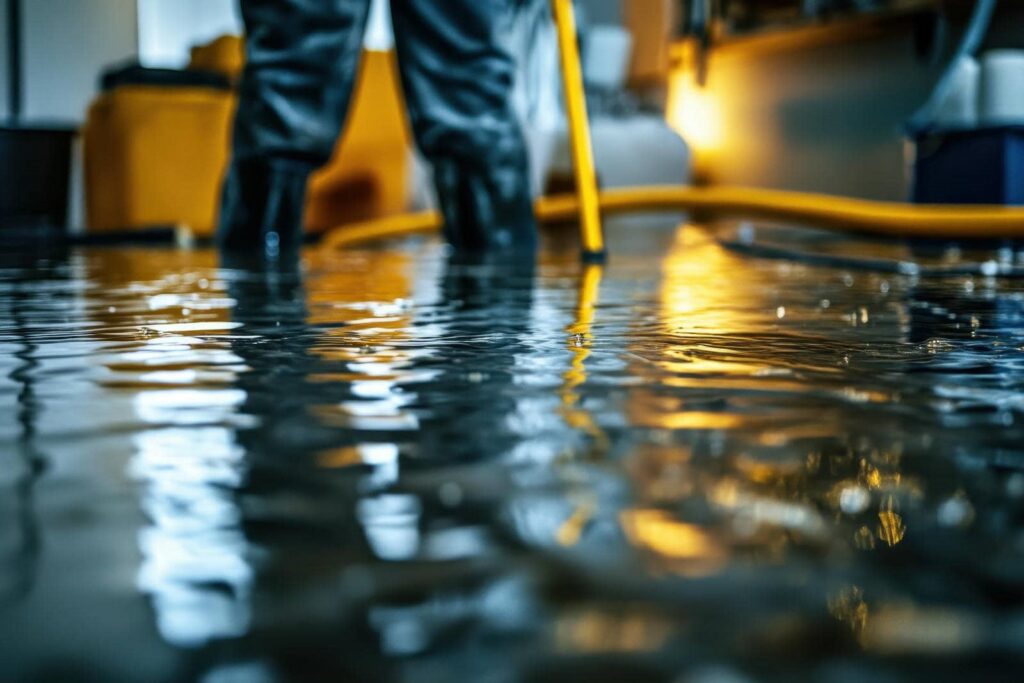
When you’re faced with standing water, having the right tools and equipment can make all the difference in your recovery efforts. Start with a high-capacity pump to quickly remove large volumes of water.
Wet/dry vacuums are essential for smaller areas and for picking up residual moisture. You’ll also want to invest in moisture meters to assess dampness levels accurately.
Remember, proper equipment maintenance is vital; regularly check hoses and filters to ensure peak performance. Familiarizing yourself with various water extraction methods, like submersible pumps or truck-mounted systems, can enhance your efficiency.
Safety Precautions
Before you start removing standing water, it’s important to prioritize safety.
Make sure you wear protective gear like gloves and waterproof boots to safeguard against contaminants. Check for electrical hazards; unplug appliances and avoid using electrical devices in wet areas to protect your personal safety. If the water’s deep, consider contacting professionals—your well-being is paramount.
Additionally, be aware of potential slip hazards; use caution when moving around. Emergency preparedness is key—stock up on necessary tools and supplies before a crisis strikes.
Having a plan in place helps you act efficiently and fosters a sense of community. Remember, taking these precautions protects you and those around you, creating a safer environment for everyone involved.
Drying and Dehumidifying
As water damage can lead to serious issues like mold growth and structural deterioration, effective drying and dehumidifying are crucial steps in the recovery process.
You’ll need to choose the right drying techniques to address the specific areas affected. Start by removing standing water with a pump or wet vacuum, then focus on airflow. Use fans, open windows, and even your HVAC system to enhance circulation.
When it comes to dehumidifier types, consider using a refrigerant dehumidifier for moderate humidity or a desiccant dehumidifier in cooler conditions. Both can effectively draw moisture from the air, helping to reduce the risk of mold.
Monitor humidity levels with a hygrometer to ensure you’re achieving optimal dryness. Remember, the sooner you act, the better your chances are of preventing extensive damage and creating a safe, comfortable environment for you and your loved ones.
Cleaning and Sanitizing Affected Areas
Once you’ve removed excess water and dried the affected areas, cleaning and sanitizing are essential to secure a safe environment.
You want to make certain the space is free from contaminants and mold, which can pose health risks.
Here are some effective cleaning techniques to follow:
- Vacuum any debris using a wet/dry vacuum to eliminate dirt and particles.
- Wash surfaces with soapy water to remove grime, using a brush for stubborn spots.
- Apply sanitizing products like diluted bleach or commercial disinfectants to kill bacteria and viruses.
- Rinse thoroughly with clean water to make sure no residue remains, and let areas dry completely.
Inspecting for Structural Damage
Inspecting for structural damage is essential after water removal to confirm the safety and integrity of your property.
Start by evaluating the foundation’s integrity; cracks or shifts can indicate serious issues that may compromise your home’s stability. Pay close attention to walls as well. Look for bulging, cracks, or damp spots that could signal a loss of wall stability.
It’s important to check both interior and exterior surfaces, as water exposure can weaken structural components.
If you notice any signs of damage, don’t hesitate to consult a professional. They can provide a thorough evaluation and necessary repairs to confirm your home remains a safe haven for you and your loved ones.
Preventing Mold Growth
To effectively prevent mold growth after water removal, it’s essential to act quickly and decisively. Mold can start to develop within 24 to 48 hours in damp environments, so here’s what you need to do for effective mold prevention:
- Ensure Thorough Drying: Use fans and dehumidifiers to dry out affected areas completely.
- Control Humidity Levels: Keep indoor humidity below 60% by using a hygrometer to monitor levels.
- Seal All Surfaces: Apply mold-resistant paint and sealants on walls and floors to deter mold growth.
- Regular Inspections: Check for leaks and moisture regularly to catch any potential issues early.
Documenting Damage for Insurance Claims
After ensuring the area is free from mold and properly dried, documenting the damage becomes an essential step in the recovery process. You’ll want to capture clear, detailed photographs of all affected areas, including flooring, walls, and personal belongings.
Make sure to note the extent of the damage and any items that may need replacement. This damage documentation is critical for your insurance processes, as it provides evidence to support your claim.
Compile a list of damaged items, including their estimated value, and gather any receipts or warranties that might help substantiate your claim. If you’ve hired professionals for water removal, keep their invoices as well.
Seeking Professional Assistance
When facing water damage, it’s essential to seek professional assistance promptly, as they possess the expertise and equipment necessary to address the situation effectively.
By relying on professional services, you ensure a thorough damage assessment and swift recovery.
Here’s what you can expect from experts in water removal:
- Detailed Damage Assessment: Professionals identify all affected areas and potential hazards.
- Advanced Equipment: They use specialized tools for efficient water extraction and drying.
- Mold Prevention: Experts implement strategies to prevent mold growth, ensuring your space remains safe.
- Insurance Coordination: They can help you navigate insurance claims, easing your burden during this stressful time.
Choosing to work with professionals speeds up recovery and provides peace of mind.
You’re not alone in this; expert support can help restore your home and your sense of security.
Frequently Asked Questions
What Are the Signs of Water Damage in Walls and Ceilings?
You’ll notice signs of water damage in walls and ceilings through water stains, peeling paint, or soft spots. Addressing these issues promptly can prevent further damage and ensure your home remains a safe, welcoming space.
How Long Does It Take for Water Removal to Be Completed?
When it comes to water removal, the timeline can vary. Factors influencing duration include the extent of damage and moisture levels. Typically, you’re looking at hours to days for complete removal and drying.
Can I Use My Home Vacuum for Water Removal?
You shouldn’t use your home vacuum for water removal; it’s not designed for that. Instead, consider specialized water extraction techniques or alternatives like wet/dry vacuums, ensuring a safe and effective cleanup in your space.
What Personal Protective Equipment Should I Wear During Water Removal?
Think of yourself as a knight preparing for battle; wear protective gear like gloves, goggles, and waterproof boots. These safety precautions shield you from hazards, ensuring you stay safe while tackling water removal challenges.
How Can I Prevent Future Water Damage in My Home?
To prevent future water damage in your home, prioritize regular maintenance. Install water barriers, fix leaks promptly, and ensure proper drainage. These steps foster a safe environment, helping you feel secure and comfortable in your space.
Conclusion
In the chaos of water damage, swift action transforms despair into hope. As you navigate the drenched rooms, remember that each step—shutting off utilities, removing water, and drying—brings you closer to restoration. The stark contrast between the soggy mess and a dry, safe space fuels your determination. With proper precautions and thorough documentation, you not only safeguard your home but also pave the way for recovery, ensuring that the shadows of disaster give way to brighter days ahead.