Many people underestimate the importance of specialized equipment in emergency water removal. High-volume water pumps, portable extractors, and dehumidifiers are just a few tools that can greatly expedite restoration efforts. Each piece of equipment serves a distinct purpose, ensuring efficient water extraction and moisture control. Understanding these tools can make all the difference in preventing further damage. Let’s explore what each of these essential devices does and how they contribute to effective restoration.
Key Takeaways
- High-volume water pumps rapidly extract large volumes of water, minimizing damage during emergencies.
- Portable water extractors effectively remove water from various surfaces using strong vacuum systems.
- Dehumidifiers reduce excess moisture, preventing mold growth and enhancing indoor air quality post-water damage.
- Air movers increase airflow to expedite drying, minimizing further damage and supporting the dehumidification process.
- Moisture meters accurately measure moisture levels, aiding in targeted drying efforts and ensuring safe conditions for reconstruction.
High-Volume Water Pumps
High-volume water pumps are essential tools for effective emergency water removal, capable of managing large quantities of water quickly and efficiently. When you’re faced with flooding or heavy water intrusion, high-capacity pumps play a vital role in safeguarding your property.
These pumps can handle significant volumes, often exceeding hundreds of gallons per minute, ensuring rapid water extraction.
Submersible pumps, a specific type of high-volume pump, are designed to operate underwater, making them ideal for deep water removal scenarios. You’ll appreciate their durability and efficiency when tackling submerged areas.
Their compact design allows for easy deployment in tight spaces.
Using high-volume, submersible pumps accelerates the removal process while minimizing potential damage to your structure.
Understanding their functionalities equips you with the knowledge to choose the right equipment for your emergency needs, fostering a sense of preparedness and community resilience.
Portable Water Extractors
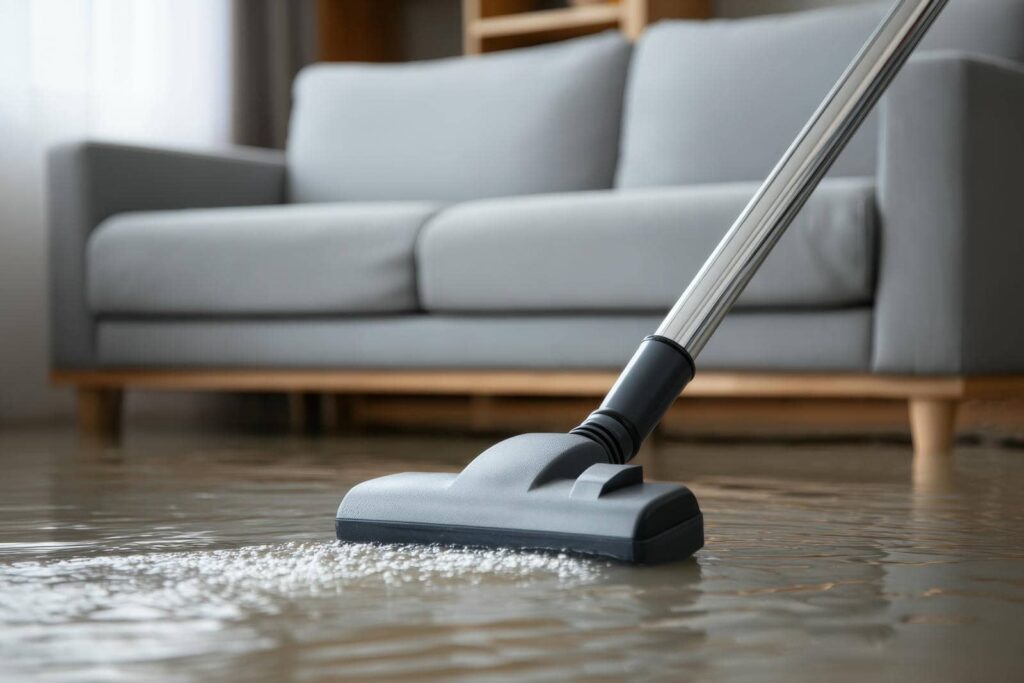
When large amounts of water need to be removed quickly, portable water extractors become indispensable.
These powerful machines utilize portable extraction techniques to deliver efficient water removal from various surfaces, including carpets, tile, and hardwood. Their compact design allows you to maneuver easily in tight spaces, making them ideal for both residential and commercial settings.
Equipped with strong vacuum systems, portable water extractors can handle significant water volumes, ensuring rapid drying and minimizing damage.
Many models also come with adjustable suction settings, allowing you to customize the extraction process based on the type of material you’re working with.
Dehumidifiers
Dehumidifiers play an essential role in restoring environments affected by water damage. They work by removing excess moisture from the air, preventing mold growth and structural damage. You’ll find various dehumidifier types suited for different situations, such as refrigerant and desiccant models.
Refrigerant dehumidifiers are ideal for warmer climates, while desiccant units excel in cooler areas.
The benefits of using dehumidifiers are significant. By lowering humidity levels, they enhance indoor air quality, creating a healthier living space. Additionally, dehumidifiers accelerate the drying process, allowing other restoration efforts to proceed more efficiently.
When choosing the right equipment, consider factors such as capacity and energy efficiency to ensure maximum performance for your specific needs. Investing in a quality dehumidifier safeguards your property and contributes to a sense of security for you and your loved ones during the recovery process.
Air Movers
Air movers are essential tools in the water damage restoration process, designed to expedite drying by increasing airflow across affected surfaces.
You’ll find different air mover types, including centrifugal and axial, each tailored for specific applications. Centrifugal air movers are ideal for directing airflow into confined spaces, while axial types excel at covering larger areas quickly.
The benefits of using air movers are substantial: they reduce drying time and help prevent mold growth and further damage. By circulating air effectively, these devices enhance the dehumidification process, ensuring a thorough restoration.
As you incorporate air movers into your restoration toolkit, you’ll appreciate their versatility and efficiency.
Understanding the various types and their specific advantages will empower you to make informed decisions, fostering a sense of belonging in the restoration community.
Embrace these tools, and you’ll be well-equipped to tackle water damage challenges confidently.
Moisture Meters
Moisture meters are essential instruments in the water damage restoration process, providing accurate measurements of moisture levels in various materials.
These devices enable you to perform effective moisture detection, ensuring you identify hidden damp areas that could lead to mold growth or structural damage. By using a moisture meter, you can assess walls, floors, and other surfaces, allowing for targeted drying efforts.
Understanding moisture levels is vital for effective humidity control in a restoration project. With a moisture meter, you can monitor the drying progress, ensuring that materials reach safe moisture levels before reconstruction begins.
It’s not just about removing water; it’s about restoring a safe environment for occupants. By incorporating moisture meters into your toolkit, you enhance your skills and contribute to a community dedicated to high-quality restoration practices.
Your expertise in moisture detection and control makes a significant difference in achieving successful outcomes.
Frequently Asked Questions
How Do I Choose the Right Equipment for My Specific Situation?
To choose the right equipment, assess your water extraction needs. Consider equipment types like pumps and vacuums, tailored for specific situations. Evaluate their capacity, efficiency, and suitability for your environment to ensure effective water removal.
What Safety Precautions Should I Take During Water Removal?
You should always wear appropriate safety gear, like gloves and boots, during water removal. Follow emergency procedures closely to avoid hazards and ensure electrical equipment is turned off to prevent accidents and maintain a safe environment.
How Long Does the Water Removal Process Typically Take?
The water extraction timeline usually ranges from a few hours to several days, depending on the severity of the situation. Drying duration often follows, taking an additional 24 to 72 hours for complete moisture removal.
Can I Rent Water Removal Equipment Instead of Buying?
Absolutely, you can rent water removal equipment instead of buying. Consider the cost comparison; renting often saves you money for short-term needs while giving you access to high-quality tools without the commitment of ownership.
What Maintenance Is Required for Water Removal Equipment?
You should establish a regular maintenance schedule for your water removal equipment. This includes thorough equipment cleaning after each use, checking hoses for leaks, inspecting filters, and ensuring all components function properly to maintain peak performance.
Review
In the world of water damage restoration, having the right equipment is like having a well-tuned orchestra at your disposal. Each tool—high-volume pumps, portable extractors, dehumidifiers, air movers, and moisture meters—plays a critical role in restoring harmony to your space. By leveraging these essential instruments, you can efficiently combat water damage and prevent the onset of mold. Make sure you’re equipped to handle any emergency, ensuring a swift and effective restoration process.