
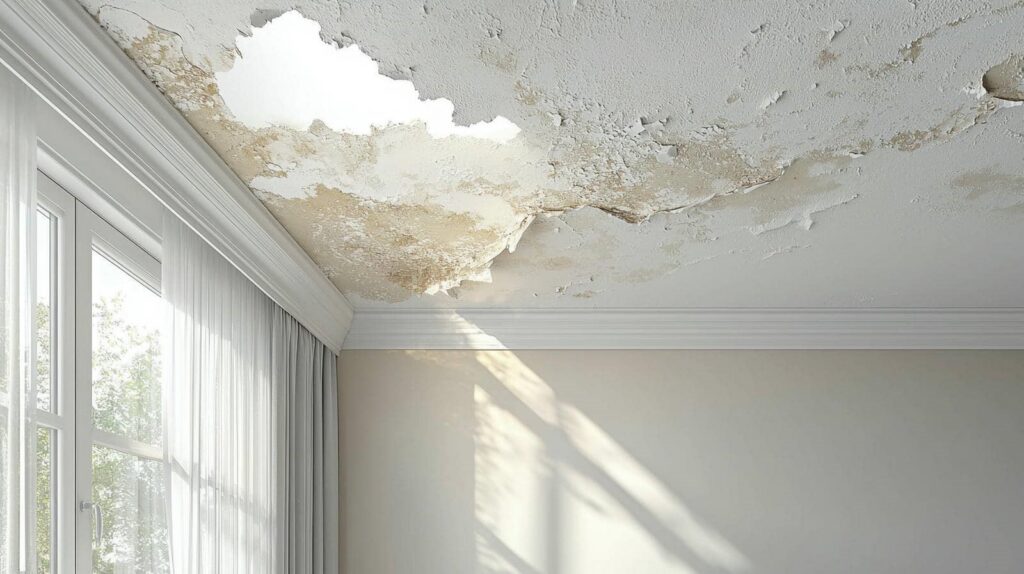
Water damage to your ceiling can be a costly headache. You might not realize the signs until it’s too late. By identifying and addressing the sources of leaks early, you can save yourself from extensive repairs. Implementing a few practical strategies can keep your ceilings safe and your home intact. Let’s explore how you can effectively prevent ceiling water damage and protect your living space from future issues.
Key Takeaways
- Regularly inspect roofs and gutters to prevent debris buildup that can lead to leaks.
- Ensure proper attic insulation to minimize moisture accumulation and reduce leak risks.
- Direct downspouts away from the foundation to prevent water pooling near ceilings.
- Monitor plumbing systems for small leaks and address them promptly to avoid escalation.
- Use leak detection devices to catch issues early before they cause significant damage.
Identify and Fix the Source of Ceiling Water Damage
To effectively mitigate ceiling water damage, you first need to identify and fix the source. Start with leak detection; check for plumbing issues, roof leaks, or condensation.
Look for water stains or mold growth, as these can signal where the problem lies. Once you’ve pinpointed the source, use appropriate repair techniques.
For minor leaks, you might just need to tighten fittings or seal gaps. If the damage is more extensive, consider hiring a professional to ensure a thorough fix.
How to Identify Signs of Ceiling Water Damage?
While you mightn’t always notice ceiling water damage immediately, specific signs can alert you to potential issues. Keep an eye out for water stains, which often appear as discolored patches on the ceiling. These can indicate leaks or moisture buildup. If you spot any yellow or brown spots, it’s time to investigate further.
Additionally, look for mold growth, particularly in damp areas. This can pose health risks, so addressing it quickly is essential. You should also check for peeling paint or sagging in the ceiling, as these can signal deeper problems.
Top Strategies to Prevent Future Ceiling Water Leaks
Preventing future ceiling water leaks is crucial for maintaining a safe and dry home. Start with regular maintenance; check your roof and gutters for debris or damage that could lead to leaks.
Make sure downspouts direct water away from your foundation. Proper insulation in your attic can also prevent moisture buildup, which reduces the risk of leaks.
Keep an eye on plumbing systems—small leaks can turn into big problems if not addressed.
Finally, consider using leak detection devices to monitor potential issues before they escalate.
Frequently Asked Questions
How Long Does It Take to Dry a Wet Ceiling?
It usually takes 24 to 48 hours to dry a wet ceiling, depending on drying techniques and humidity levels. Using fans and dehumidifiers can speed up the process, helping you restore your space faster.
Can I Paint Over Water-Damaged Ceilings?
You can paint over water-damaged ceilings after proper ceiling repair. Use mold-resistant paint types for the best results. Confirm the surface is dry and clean to achieve a smooth, long-lasting finish that blends seamlessly.
What Insurance Covers Ceiling Water Damage?
Your homeowner’s insurance typically covers ceiling water damage if it results from sudden incidents, like burst pipes. Check your policy for specific details about coverage and filing insurance claims to ensure you’re protected.
Do I Need a Professional for Minor Repairs?
You don’t always need a professional for minor repairs. Explore DIY solutions and repair techniques that suit your skill level. Just verify you’re comfortable with the task to maintain safety and achieve a good outcome.
How Can I Tell if Mold Is Present?
If you’re seeing dark spots or smelling musty odors, it’s time to investigate further. Use mold identification techniques like visual inspection and moisture checks. Addressing issues early can prevent more significant problems down the line.
Final Thoughts
By taking these proactive steps, you can shield your home from the relentless drip of potential water damage. Remember, identifying the source and addressing it promptly is key, while regular maintenance acts as your protective umbrella. Stay vigilant, and you’ll protect your ceilings and keep your home safe and comfortable. With a little effort, you can turn the tide against leaks and ensure your home remains a haven, not a hazard.