When you notice signs of water damage on your ceiling, it’s essential to assess the situation methodically. Start by identifying visible indicators like discoloration or sagging. Next, check for leaks or stains above the damaged area. Finally, use moisture detection tools to uncover any hidden dampness. Understanding these steps will help you determine the extent of the damage and the repairs needed, but there’s more to evaluate before taking action.
Key Takeaways
- Inspect areas above the ceiling for leaks, stains, or moisture to identify potential sources of water damage.
- Check for discoloration and sagging to assess the severity of the damage on the ceiling.
- Feel for texture changes; soft or crumbling surfaces indicate significant water accumulation.
- Look for mold growth which signals ongoing moisture issues that need addressing.
- Conduct a thorough visual inspection to evaluate the overall condition of the ceiling and surrounding areas.
How to Find Out What’s Causing Your Ceiling Water Damage?
To identify the source of your ceiling water damage, start by inspecting areas directly above the affected ceiling. Check for any visible leaks, such as dripping pipes or water stains.
Use moisture mapping techniques to pinpoint hidden dampness that may not be immediately visible. Employ leak detection tools, like moisture meters, to assess the extent of the issue.
Pay attention to areas around fixtures, vents, and joints, as these are common culprits. Once you’ve gathered information, you can better understand where the water is entering and how to address it.
Don’t hesitate to consult professionals if needed; they can provide insights and solutions tailored to your situation, ensuring you feel supported during this process.
Assessing Ceiling Water Damage: How Bad Is It?
How can you accurately gauge the severity of ceiling water damage? Start with a thorough damage assessment and a visual inspection. Here are four key steps to help you evaluate the situation:
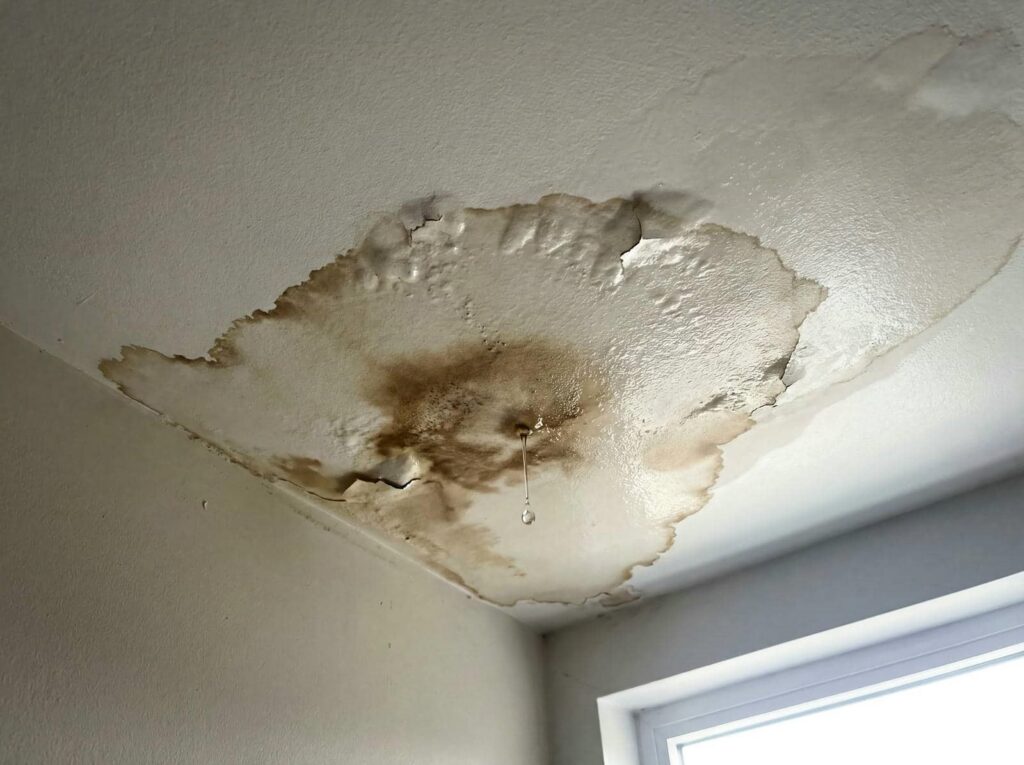
Check for discoloration: Look for yellow or brown stains; these indicate prolonged moisture exposure.
Inspect for sagging: A drooping ceiling suggests significant water accumulation, which can lead to structural issues.
Feel for texture changes: Touch the ceiling; a soft or crumbling surface signals serious damage.
Look for mold: Any visible mold growth may indicate ongoing moisture problems, necessitating immediate attention.
How to Fix and Prevent Ceiling Water Damage
Fixing and preventing ceiling water damage requires a systematic approach to address both the symptoms and underlying causes.
First, identify the source of the leak—whether it’s a roof issue or plumbing problem. Once you’ve fixed the source, use appropriate repair materials, like plaster or drywall, to patch the damaged ceiling.
Make certain that you sand and paint for a smooth finish. To prevent future damage, consider implementing waterproofing techniques such as applying sealants around plumbing fixtures and installing vapor barriers in attics.
Regularly inspect your roof and plumbing for potential issues. By being proactive, you create a safer, more welcoming environment for everyone in your home.
Frequently Asked Questions
How Long Does It Take for Ceiling Water Damage to Appear?
Ceiling water damage typically appears within a few hours to days after a leak. Regular ceiling inspections can help you spot early signs. Keep an eye out for discoloration, stains, or peeling paint.
Can I Repair Ceiling Water Damage Myself?
Absolutely, you can tackle ceiling water damage with a DIY repair. Just gather your tools, estimate costs for materials, and follow a methodical approach. It’s rewarding to restore your space and make it feel like home again.
What Are the Health Risks of Water-Damaged Ceilings?
Water-damaged ceilings pose health risks like mold exposure, which can lead to symptoms such as respiratory issues, allergies, and headaches. You should address any damage promptly to protect your well-being and maintain a healthy environment.
How Can I Tell if Mold Is Present?
You can detect mold by checking for dark spots, a musty odor, and moisture in your ceiling. For effective mold prevention, maintain low humidity and guarantee proper ventilation to keep your space healthy and inviting.
Should I Notify My Insurance About Water Damage?
Absolutely, you should notify your insurance about water damage. Early communication guarantees your insurance coverage remains intact. A thorough damage assessment can help you navigate the claims process, protecting your home and peace of mind.
Wrap-Up
Swiftly scanning for signs of ceiling water damage can save you serious stress and costly repairs. By diligently detecting drips, diagnosing discoloration, and determining damage, you can tackle the trouble head-on. Remember, proactive prevention plays a pivotal role in protecting your space from future fiascos. With these steps, you’re not just patching problems; you’re prioritizing a safe, sound sanctuary. Stay vigilant, and safeguard your ceilings for a brighter tomorrow!