Ceiling water damage can be a homeowner’s nightmare, but knowing how to tackle it effectively can save you time and money. First, you need to identify the source of the leak, as this is essential for any repair. Once that’s done, you’ll want to assess the damage and consider your options for repair. But what should you do immediately, and when is it time to call in the professionals? Let’s explore the best solutions together.
Key Takeaways
- Identify the source of water damage immediately to prevent further issues before proceeding with repairs.
- Use mold-resistant materials and basic tools for effective DIY ceiling repairs after addressing leaks.
- Document all damage and repairs for insurance claims, including photos and detailed descriptions.
- Consult professionals for severe damage or mold presence to ensure safe and effective remediation.
- Implement regular maintenance checks on roofs and plumbing to prevent future water damage.
What Causes Ceiling Water Damage?
When you notice stains or bulges in your ceiling, it’s often a sign of underlying water damage. Several factors can contribute to this issue.
Leaky roofs, often caused by weather events, can allow water to seep in, damaging your ceiling over time. Plumbing issues, like burst pipes, can lead to immediate problems as well.
You might also experience condensation buildup from poor insulation, creating moisture that weakens your structure. Appliance failure—think dishwashers or washing machines—can cause unexpected leaks.
Additionally, drainage issues around your home can exacerbate water infiltration. Understanding these causes helps you take proactive measures to protect your home and maintain a safe, welcoming space for yourself and your loved ones.
Signs Your Ceiling Has Suffered Water Damage
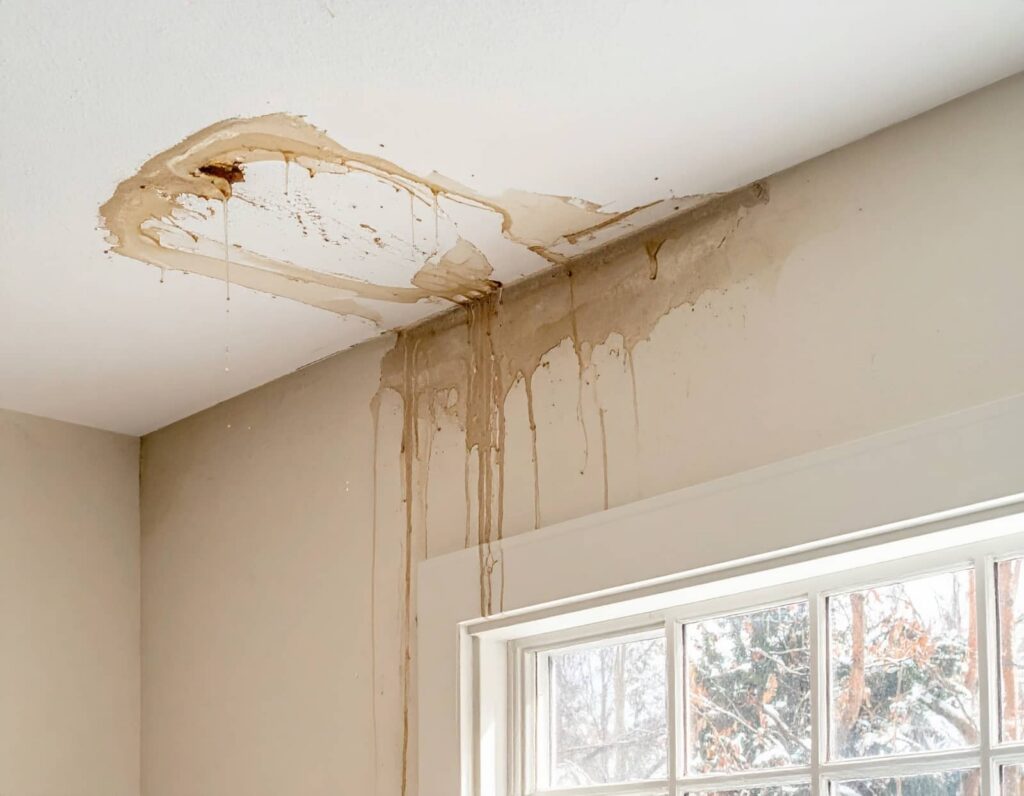
If you notice discoloration or stains on your ceiling, it’s a clear sign of potential water damage.
Peeling or bubbling paint can also indicate underlying moisture issues, while any signs of mold or mildew should never be ignored.
Keep an eye out for these warning signs to address problems before they worsen.
Discoloration and Stains
These unsightly marks often indicate underlying issues, like leaks or humidity problems. Common discoloration causes include plumbing issues, roof leaks, or even condensation.
If you notice yellowish or brown stains, it’s essential to act quickly. Not only do these stains detract from your home’s appeal, but they can also signal more serious damage.
For effective stain removal, start by identifying the source of the water. Once you’ve fixed the issue, cleaning solutions or repainting can help restore your ceiling’s former glory.
Peeling or Bubbling Paint
Ignoring these signs can lead to more severe issues, like structural damage or mold growth.
It’s essential to address the problem promptly to protect your home and maintain a welcoming environment.
Start by identifying the source of the water intrusion, then consider repairing or repainting your ceiling.
Taking these steps restores your ceiling’s appearance and ensures a healthier living space for you and your loved ones.
Mold or Mildew Growth
When you notice a musty smell or see dark spots on your ceiling, it’s time to take action, as these are clear signs of mold or mildew growth.
Ignoring these signs can lead to serious health issues and further damage to your home.
Start with mildew removal by cleaning the affected area with a mixture of water and vinegar.
Ensure proper ventilation to inhibit future growth.
For effective mold prevention, consider using dehumidifiers and regularly checking for leaks.
Don’t hesitate to reach out to professionals if the problem escalates.
Taking these steps will enhance your living environment and foster a sense of safety and well-being for you and your loved ones.
What to Do Immediately After Discovering Ceiling Water Damage?
Once you spot water damage on your ceiling, act quickly to minimize further issues.
First, assess the damage to understand its extent, then stop the source of the water to prevent more leaks.
Don’t forget to document everything for your insurance claim—it’ll make the process much smoother.
Assess The Damage Extent
How can you effectively assess the extent of ceiling water damage? Start with a thorough damage assessment.
Look for discoloration, peeling paint, or sagging areas on your ceiling. These signs indicate moisture accumulation, which can lead to mold growth if not addressed quickly.
Next, use a moisture evaluation tool, like a moisture meter, to measure the level of dampness in the affected area. This will help you determine how severe the damage is and whether it’s spread beyond what’s visible.
Don’t forget to check surrounding areas, like walls and insulation, for hidden moisture.
Stop Water Source
After evaluating the damage extent, your immediate priority should be to stop the water source.
Begin with water source identification—check for visible leaks in pipes, roofs, or appliances. If you can’t pinpoint the issue, employ leak detection techniques like using moisture meters or thermal imaging. These tools help you find hidden leaks behind walls or ceilings, preventing further damage.
Once you locate the source, shut off the water supply immediately to minimize the impact. If necessary, contact a plumber for professional assistance.
Document For Insurance
As soon as you discover ceiling water damage, it’s crucial to start documenting the situation for your insurance claim. Proper claim documentation can make a significant difference in how smoothly your insurance policies cover the damage.
Here’s what to do:
Take Photos: Capture clear images of the damage, including any affected areas.
Record Details: Note the date and time you discovered the leak, along with any visible water stains or mold.
List Damaged Items: Write down any furniture or belongings affected by the water.
Contact Your Insurer: Reach out to your insurance provider to report the damage and get guidance on the next steps.
These actions can help ensure your claim process is efficient and effective, giving you peace of mind.
DIY Repairs for Water-Damaged Ceilings
When you notice water stains on your ceiling, it’s essential to act quickly to prevent further damage and mold growth.
Start by identifying the source of the leak and fixing it. Once that’s done, you can immerse yourself in ceiling repair techniques.
For minor damage, you’ll need a few basic supplies like a putty knife, joint compound, and sandpaper. Choose your DIY material selection wisely; opt for mold-resistant products to ensure longevity.
After applying the compound, let it dry completely, then sand it smooth. Finally, repaint the area to blend it with the rest of your ceiling.
When to Hire a Professional for Repairs
If you’re facing extensive water damage or structural issues, it’s wise to contemplate hiring a professional for repairs.
Here are some key indicators that it’s time to call in the experts:
Severe Water Damage: If the ceiling has significant sagging or extensive stains, it’s critical to get a professional assessment.
Mold Presence: Discovering mold growth means you need specialized skills to handle it safely.
Compromised Structure: If you notice cracks or warping in your ceiling, structural integrity is at stake.
High Repair Costs: When estimates exceed your DIY budget, professionals can provide a clearer understanding of repair costs and timeline expectations.
Taking this step can save you time and ensure a safe, effective repair process.
Top Strategies to Prevent Future Ceiling Water Damage
To prevent future ceiling water damage, it’s essential to be proactive about maintenance and repairs.
Start with regular inspections of your roof and plumbing systems—look for leaks, cracks, or signs of water stains. Don’t wait until you notice a problem; preventative maintenance can save you time and money down the line.
Make certain your gutters are clean and functional, directing water away from your home. Additionally, consider installing a water leak detection system for added security.
If you have an attic, ensure it’s properly ventilated to avoid moisture buildup.
Insurance Tips for Water Damage Claims
Maneuvering the claims process for water damage can feel overwhelming, especially when you’re already dealing with the stress of repairs.
To simplify things, follow these essential tips to ensure you maximize your insurance coverage:
Document Everything: Take photos and videos of the damage before starting repairs.
Notify Your Insurer Promptly: Call your insurance company as soon as possible to report the claim.
Understand Your Policy: Familiarize yourself with what’s covered and any deductibles you’ll need to meet.
Keep Records: Save all receipts for repairs and related expenses to support your claim.
Frequently Asked Questions
How Long Does It Take for Water Damage to Show on Ceilings?
Water damage can show on ceilings within a few hours to days after a leak. Regular ceiling inspections help you catch issues early, preventing larger problems and keeping your home safe and comfortable.
Can Ceiling Water Damage Affect the Home’s Value?
Absolutely, ceiling water damage can dramatically lower your home’s value. While property insurance might cover repairs, the unsightly ceiling aesthetics could turn potential buyers away, ironically making your dream home feel less appealing.
What Materials Are Best for Ceiling Repairs?
For ceiling repairs, consider using drywall, plaster, or ceiling tiles. Each material option has unique benefits. Employ effective repair techniques like patching and priming to ensure a durable, professional finish that enhances your home’s appeal.
How Can I Tell if Mold Has Formed?
You can spot mold by checking for dark spots or a musty odor. Use moisture detection tools to assess damp areas. Trust your instincts; if something feels off, it’s worth investigating further for mold identification.
Are There Any Health Risks Associated With Ceiling Water Damage?
Yes, there are health risks associated with ceiling water damage. Mold exposure can lead to respiratory issues and allergies. Water stains often indicate moisture problems, so addressing them promptly is essential for your well-being.
Review
Addressing ceiling water damage promptly can save you time and money. By understanding the causes and taking proactive steps, you can protect your home from costly repairs. Whether you choose DIY solutions or call in a professional, acting quickly is key. Stay vigilant, and you can keep your ceilings safe and sound for years to come!