When faced with flood damage, it can feel overwhelming, especially if you’re on a budget. You don’t have to spend a fortune to restore your home effectively. By utilizing some simple, cost-effective strategies, you can tackle the home cleanup without breaking the bank. From recognizing damage early to making your own cleaning solutions, there are practical steps you can take. Let’s explore how to manage the chaos and make the recovery process smoother.
Key Takeaways
- Use DIY cleaning solutions like equal parts water and vinegar to save on commercial products while effectively disinfecting surfaces.
- Employ natural dehumidifiers like bowls of baking soda or rock salt to reduce humidity affordably.
- Share tools and resources with neighbors to minimize individual expenses and expedite cleanup efforts.
- Utilize heavy-duty trash bags for debris collection and wear rubber gloves to protect your hands during the process.
- Connect with community support groups for emotional encouragement and practical help in recovery efforts.
How to Quickly Spot Flood Damage?
When a flood strikes, the aftermath can be overwhelming, but spotting flood damage early is essential for effective cleanup.
Start your flood evaluation by checking for standing water in your home; this can cause significant issues if left untreated. Look for signs of moisture on walls, ceilings, and floors, as these indicate potential water damage.
Pay attention to warped or stained surfaces, which signal that a damage appraisal is necessary. Don’t forget to check your appliances and electrical systems, as water exposure can create hazards.
By acting quickly and evaluating the damage, you can minimize long-term effects and make informed decisions for recovery.
Budget-Friendly Cleanup Supplies
When you’re facing cleanup after a flood, having the right supplies can make all the difference without breaking the bank.
You can find essential cleaning tools, whip up DIY cleaning solutions, and explore budget-friendly disinfecting options to help restore your home.
Let’s look at some practical choices that won’t strain your finances.
Essential Cleaning Tools List
Cleaning up after a flood can feel overwhelming, but having the right tools makes the process much more manageable.
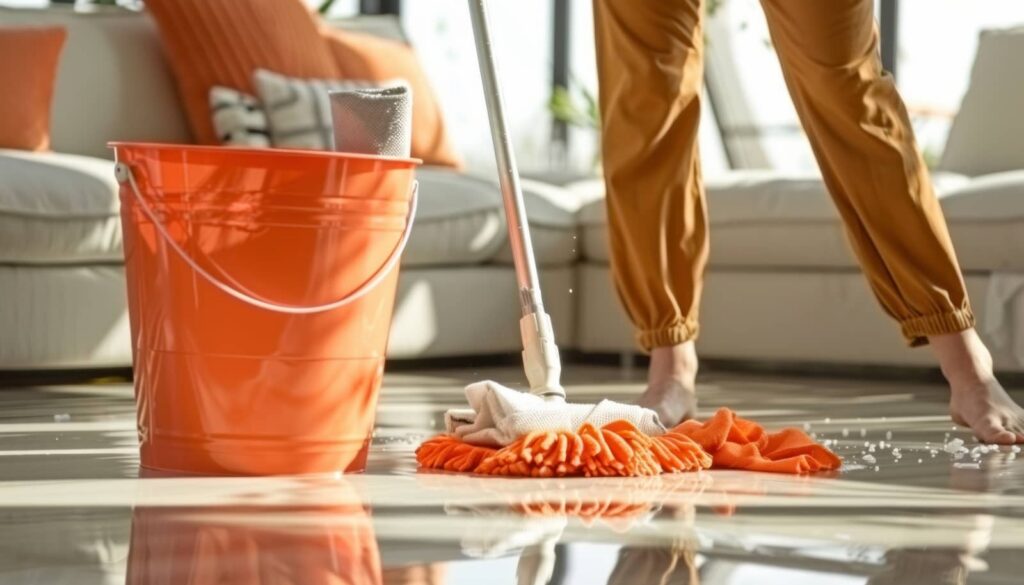
Start with essential gear like heavy-duty trash bags for debris and a sturdy broom for sweeping. You’ll want a mop and bucket for any remaining water, along with sponges for scrubbing surfaces.
Invest in a good pair of rubber gloves to protect your hands, and a mask to avoid inhaling dust or mold. A shop vacuum can be a lifesaver for removing water quickly, while cleaning gadgets like microfiber cloths help you tackle stubborn stains.
Having these budget-friendly supplies on hand not only eases the cleanup but also helps you feel more in control during this challenging time.
DIY Cleaning Solutions
While tackling the aftermath of a flood, you don’t need to break the bank on expensive cleaning solutions. Simple DIY options can be just as effective.
For a powerful cleaning agent, mix equal parts of water and vinegar to create a vinegar solution. This natural cleaner tackles mold and odors without harsh chemicals.
If you’re dealing with stubborn stains or odors, sprinkle baking soda on affected areas. Let it sit for a few hours, then vacuum it up for fresh results.
These budget-friendly solutions not only save you money but also give you a sense of control during a stressful time. Embrace these easy methods, and you’ll find comfort in reclaiming your space step by step.
Budget-Friendly Disinfecting Options
Disinfecting your home after a flood doesn’t have to drain your wallet. You can create effective disinfecting solutions using everyday ingredients. For example, a mixture of vinegar and water is a powerful, eco-friendly cleaner that helps kill germs and neutralizes odors.
You can also use baking soda to scrub surfaces, leaving your home fresh and clean without harmful chemicals.
If you prefer store-bought options, look for budget-friendly eco-friendly cleaners that won’t harm your family or the environment. Many brands offer affordable disinfectants that are safe and effective.
Natural Techniques for Efficient Water Removal
When facing water damage, you can turn to simple, natural techniques to help with cleanup.
Using towels and mops can effectively soak up excess water, while natural dehumidifiers like bowls of salt or baking soda can help reduce moisture in the air.
These methods aren’t only budget-friendly but also easy to implement as you work to restore your home.
Use Towels and Mops
Using towels and mops for water removal can make a significant difference in your flooded home cleanup.
First, gather absorbent towels to employ effective towel techniques. Start by placing them on the wet areas, allowing them to soak up as much water as possible. Wring them out frequently to maximize their efficiency.
Next, switch to mop methods. Use a sturdy mop to cover larger spaces, ensuring you make smooth, sweeping motions to gather water. Don’t forget to wring it out often, too.
As you work, remember you’re not alone in this struggle. Relying on these simple tools can help restore your home, giving you a sense of control in a tough situation.
Stay focused, and you’ll make progress!
Employ Natural Dehumidifiers
Natural dehumidifiers can be a game changer in your flooded home cleanup. They’re budget-friendly and effective for moisture control, helping to create a healthier living space.
Here are three easy dehumidifier types you can use:
- Baking Soda: This common kitchen staple absorbs moisture and can be placed in bowls around your home.
- Rock Salt: It’s another powerful moisture absorber. Just fill a container with rock salt, and it’ll draw water from the air.
- Charcoal: Activated charcoal is great for absorbing humidity. Place it in a breathable bag or container to maximize its effectiveness.
Using these natural methods not only aids in drying out your space but also fosters a sense of community as you recover together.
Tips for Cost-Effective Item Recovery
Even though recovering items after a flood can feel overwhelming, there are several cost-effective strategies you can employ to salvage your belongings.
Start by evaluating which items are worth the effort for item restoration; prioritize sentimental or valuable pieces.
Use simple salvage techniques, like rinsing muddy items with clean water and air-drying them in a shaded area.
For fabrics, wash them promptly with detergent, but be cautious—some may not recover fully.
Consider using vinegar solutions for disinfection on non-porous items.
Document your recovery process with photos for insurance claims.
DIY Mold Prevention After Flooding
After flooding, it’s crucial to act quickly to prevent mold growth, as it can develop within 24 to 48 hours in damp environments.
Here are three effective DIY strategies for mold prevention:
- Dry Out Your Space: Use fans and dehumidifiers to reduce humidity levels. Aim for below 60% humidity to inhibit mold growth.
- Clean Thoroughly: Wash all surfaces with a mixture of water and detergent. For stubborn areas, a solution of one cup of bleach to a gallon of water can help.
- Check for Hidden Moisture: Inspect behind walls and under carpets. Remove any soaked materials to eliminate hidden dampness.
Signs You Need Professional Help After a Flood?
How can you tell when it’s time to call in the pros after a flood? If you notice significant flood damage that seems overwhelming, it’s a clear sign to seek help.
When water has seeped into walls, floors, or your home’s structure, a professional assessment is essential.
If you spot mold growth or smell a musty odor, don’t hesitate—mold can spread quickly and pose health risks.
Additionally, if you’re unsure about the safety of your electrical systems or appliances, it’s better to let experts handle it.
Remember, your well-being and safety matter. Trust your instincts; if something feels off, reach out for professional assistance.
You’re not alone in this, and getting help can save you time, money, and stress.
Resources for Flood Cleanup Assistance
When faced with the aftermath of a flood, where can you turn for help? Finding the right resources can make a huge difference in your recovery.
Here are three community resources you should consider for flood relief:
- Local Disaster Relief Organizations: Many nonprofits offer immediate assistance, from food to cleanup supplies.
- Government Programs: Check your local or state government websites for grants or low-interest loans designed for flood recovery.
- Community Support Groups: Connecting with neighbors can provide emotional support and practical help, whether it’s sharing tools or advice.
Don’t hesitate to reach out. You’re not alone in this; your community is here to help you rebuild and recover.
Frequently Asked Questions
How Can I Prevent Future Flooding in My Home?
To prevent future flooding, consider implementing effective drainage solutions and making landscaping modifications. Elevate your yard, direct water away from your foundation, and maintain gutters to create a safer, more welcoming home environment for you.
What Insurance Coverage Do I Need for Flood Damage?
Imagine a lifeboat in a storm; flood insurance provides that security. You need extensive coverage options, including building and personal property protection, to shield your home from nature’s unpredictable forces. Stay prepared, stay safe.
How Do I Assess the Value of Damaged Items?
To assess damaged items, start with an item appraisal. Document each piece’s condition and market value, then estimate damage costs. This process helps you understand your losses and supports potential insurance claims effectively.
Are There Grants for Flood Recovery Assistance?
Yes, you can find federal assistance and local programs for flood recovery. It’s like steering through a stormy sea; reaching out to your community and resources can guide you toward relief and rebuild your life.
What Health Risks Are Associated With Floodwaters?
Floodwaters can expose you to harmful contaminants and increase mold growth, leading to respiratory issues and skin infections. It’s essential to stay safe and seek help to mitigate these health risks effectively.
Final Thoughts
Cleaning up after a flood can feel overwhelming, like trying to bail out a sinking ship. But with these budget-friendly tips, you can tackle the mess without breaking the bank. Remember, you’re not alone reach out to neighbors and community resources for support. Stay vigilant for signs of mold or structural damage, and don’t hesitate to call in professionals if needed. With patience and teamwork, you can restore your home and peace of mind.