When faced with ceiling water damage, you need to act swiftly. Choosing effective solutions protects your home’s structure and prevents health risks such as mold growth. Ignoring the issue can lead to escalating repair costs and further complications. As you assess your options, understanding the causes and signs of water damage will be essential. What steps should you take next to ensure your living space remains safe and sound?
Key Takeaways
- Effective solutions prevent further structural damage, protecting your home’s integrity and reducing long-term repair costs.
- Timely intervention minimizes mold growth, safeguarding your family’s health from allergens and respiratory issues.
- Professional repairs ensure thorough assessments and long-lasting fixes, reducing the likelihood of recurring problems.
- Utilizing effective restoration techniques enhances your home’s appearance and maintains its value over time.
- Regular maintenance as part of effective solutions helps prevent future water damage, ensuring peace of mind.
Effective Solutions for Ceiling Water Damage Repair
When dealing with ceiling water damage, addressing the issue promptly can save you time and money in the long run.
Start with a thorough damage assessment to identify the source and extent of the problem. Effective water mitigation techniques can help minimize further damage, while professional ceiling repair ensures a long-lasting fix.
Consider restoration techniques like drywall replacement or ceiling painting to restore your space’s appearance. Regular ceiling maintenance can prevent future issues, keeping your home safe and sound.
Don’t forget to check your insurance coverage; it might help offset repair costs.
Understanding Ceiling Water Damage: Causes and Effects
When it comes to ceiling water damage, understanding the common causes is essential for effective prevention.
You’ll want to recognize the signs early to avoid long-term impacts on your home’s structure and safety.
Let’s explore what leads to this damage and how it can affect you in the long run.
Common Causes Identified
Understanding the common causes of ceiling water damage is essential, as it helps you prevent costly repairs.
Leaky roofs are often the primary culprits, allowing rain to seep through. Plumbing issues, like burst pipes, can also lead to unexpected leaks.
Additionally, condensation buildup occurs in poorly ventilated areas, creating moisture that damages your ceiling over time.
Appliance malfunctions, such as faulty washing machines or dishwashers, can cause water to overflow and seep into ceilings.
Weather impacts, especially heavy storms, exacerbate these problems.
Structural flaws, like weak beams, and aging materials can contribute to water intrusion too.
Ultimately, ventilation problems prevent moisture from escaping, leading to further damage.
Identifying these causes helps you safeguard your home effectively.
Signs of Damage
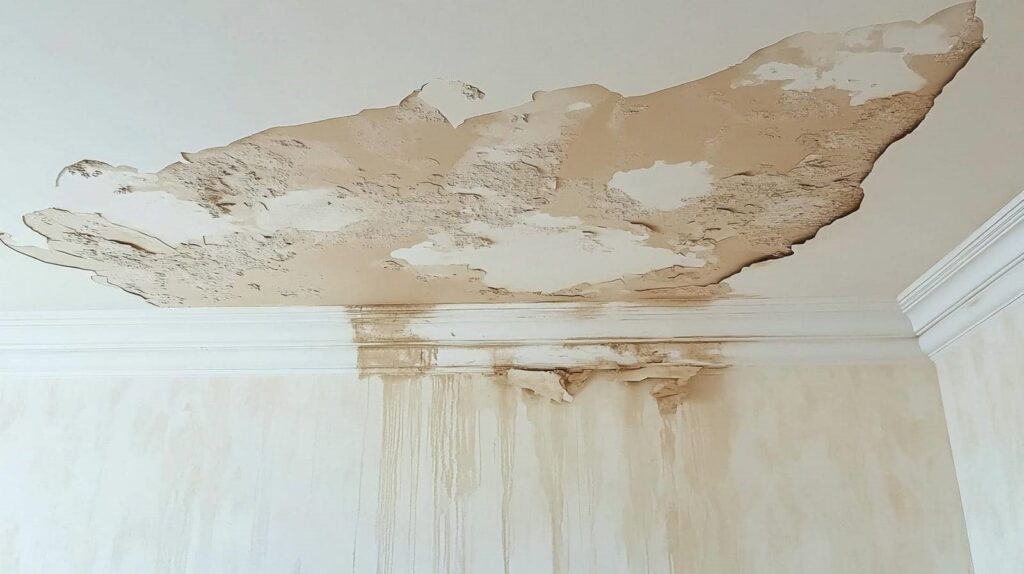
Recognizing the signs of ceiling water damage can save you from more extensive repairs down the line. Look for water stains that appear as brown or yellow patches on your ceiling.
Peeling paint and discoloration patches are also telltale signs that moisture is at play. If you notice a sagging ceiling, it’s essential to act quickly, as this can indicate structural issues.
A musty odor often accompanies mold growth, which thrives in damp environments. Check for damp insulation in your attic, as this can worsen damage if left untreated.
Use moisture detection tools to assess the extent of the problem. Addressing these signs promptly can greatly shorten your repair timeline and protect your home.
Long-Term Impacts Explained
Although you may notice minor ceiling water damage at first, the long-term impacts can be significant if left unaddressed.
Over time, what seems like a small issue can lead to long-term deterioration of your ceiling and surrounding structures. Water intrusion weakens the structural integrity of your home, making it more susceptible to further damage, such as mold growth or even collapse in severe cases.
You mightn’t see the full extent of the damage initially, but ignoring it can lead to costly repairs down the road.
By addressing water damage promptly, you protect your ceiling, your home’s overall stability, and your family’s well-being.
Make the choice to act now and preserve your space for the future.
Signs of Ceiling Water Damage
Have you ever noticed unusual stains or discoloration on your ceiling? These water stains are often the first sign of trouble. You might also see peeling paint, indicating moisture issues beneath the surface.
Don’t ignore the potential for mold growth, which can harm your health and compromise your home’s structural integrity. Regular moisture detection is essential; inspect your ceilings frequently to catch problems early.
If you spot signs of damage, consider DIY tips to address minor issues before they escalate. Remember, repair costs can skyrocket if you delay action.
Finally, check your insurance coverage to understand what’s included for water damage. Staying informed helps you protect your home and maintain its value.
Why Is Quick Action Crucial for Water Damage?
When you spot water damage, acting quickly is essential.
It helps prevent structural damage, curbs mold growth, and keeps repair costs manageable.
The sooner you address the issue, the better off your home—and your wallet—will be.
Prevent Structural Damage
Act quickly to address ceiling water damage, as delays can lead to serious structural issues.
When you take immediate action, you protect your home and ensure safety for everyone inside.
Here are some preventive measures to take into account:
Conduct Structural Assessments: Regularly evaluate the integrity of your home to catch issues early.
Inspect Roof and Gutters: Make sure they’re clear and in good condition to prevent leaks.
Seal Cracks and Gaps: Use caulk or sealants to keep water out.
Monitor Humidity Levels: Keep indoor humidity in check to avoid excess moisture.
Reduce Mold Growth
Ignoring water damage can lead to more than just structural issues; it paves the way for mold growth. Quick action is vital for mold prevention, as mold thrives in damp environments.
By addressing water damage immediately, you’re protecting your home and your health. Moisture control is essential—make certain that areas prone to leaks are fixed promptly, and use dehumidifiers to keep humidity levels in check.
Remember, mold can spread quickly and may not always be visible, leading to potential respiratory issues for you and your loved ones. Taking swift action helps create a safer, healthier living space.
Don’t wait for problems to escalate; prioritize mold prevention to ensure a comfortable home environment for everyone.
Minimize Repair Costs
Prompt action is essential when dealing with water damage, as delays can considerably escalate repair costs. By acting quickly, you can utilize cost-effective methods and budget-friendly options to minimize your expenses.
Here are four steps to keep in mind:
Identify the Source: Find and fix the leak to prevent further damage.
Remove Water: Use pumps or wet vacs to quickly eliminate standing water.
Dry the Area: Employ fans and dehumidifiers to ensure thorough drying, reducing mold risk.
Assess Damage: Evaluate what can be repaired versus replaced to save money.
Taking these steps helps you manage costs and fosters a sense of community as you share solutions with others facing similar challenges.
Consequences of Neglecting Ceiling Water Damage
When you overlook ceiling water damage, you’re not just risking unsightly stains; you’re inviting a host of serious problems into your home.
Water stains can lead to more than just cosmetic issues—they’re often a sign of deeper, hidden troubles. Ignoring these signs can result in ceiling mold, which poses health risks for you and your loved ones.
Mold thrives in damp conditions, making your home a breeding ground for allergens and respiratory issues.
Additionally, neglected water damage can compromise your ceiling’s structural integrity, leading to costly repairs down the line.
By addressing these issues promptly, you maintain your home’s appearance and protect your family’s well-being.
Don’t let ceiling water damage turn into a major headache.
Choosing the Right Professionals for Ceiling Water Damage Restoration
Finding the right professionals for ceiling water damage restoration can make all the difference in your recovery process.
You want experts who understand the nuances of water damage and employ effective restoration techniques. Here’s what to look for:
Professional Qualifications: Verify they’re certified and trained in water damage restoration.
Experience: Choose professionals with a proven track record in handling similar issues.
Tools and Techniques: They should use advanced equipment and effective restoration techniques for thorough work.
Reputation: Look for positive reviews and referrals from your community.
Should You DIY or Hire Professionals for Ceiling Water Damage Repair?
When it comes to ceiling water damage repair, you need to assess the damage severity first.
If it’s extensive, you might lack the skills and tools needed for a proper fix.
Weighing your capabilities against the requirement for professional help can save you time and money in the long run.
Assessing Damage Severity
Evaluating the severity of ceiling water damage is essential, as it can determine whether you tackle the repair yourself or call in professionals.
Start with a damage assessment to identify severity indicators. Here are four key factors to take into account:
Extent of Staining: Are there large, dark spots, or just small areas?
Structural Integrity: Is the ceiling sagging or showing cracks?
Moisture Level: Use a moisture meter—high readings often mean more extensive damage.
Source of Water: Is it a minor leak or a major plumbing issue?
Skills And Tools Needed
Deciding whether to tackle ceiling water damage yourself or hire a professional can hinge on your skills and the tools at your disposal.
If you’re handy and familiar with repair techniques, you might feel confident taking on the job. Essential equipment like a moisture meter, a ladder, and drywall tools can make your DIY efforts more effective.
However, if you lack experience or the right gear, bringing in a professional might save you time and stress. They’ll have the expertise and equipment to quickly assess and fix the damage.
Ultimately, consider your comfort level and the complexity of the repair—sometimes, teamwork makes the dream work, ensuring your home stays safe and sound.
How to Prevent Ceiling Water Damage in the Future
To effectively prevent ceiling water damage in the future, you’ll want to regularly inspect your plumbing and roofing systems.
Implementing preventive maintenance is key. Here are four steps you can take:
Check for Leaks: Regularly inspect pipes for any signs of leaks or corrosion.
Inspect Roof Condition: Look for missing shingles or cracks that could allow water in.
Use Water-Resistant Materials: Consider installing ceilings and insulation made from water-resistant materials to minimize damage.
Maintain Gutters: Keep gutters clean and clear so water flows away from your home.
How to File an Insurance Claim for Ceiling Water Damage
When faced with ceiling water damage, how do you navigate the insurance claims process?
Start by gathering all necessary insurance documentation, including photographs of the damage and any repair estimates. Document your communications with contractors and adjusters to strengthen your claim.
Next, reach out to your insurance provider to report the damage promptly. They’ll guide you through the claim process, which usually involves filling out forms and submitting your documentation.
Be detailed and honest about the extent of the damage. Follow up regularly to ensure your claim is progressing.
Finally, stay organized; keeping track of all paperwork will make the process smoother and help you feel more in control during this challenging time.
Maintaining Ceiling Integrity After Water Damage Repair
While repairing ceiling water damage is essential, maintaining its integrity afterward is just as important. You want to ensure your ceiling remains safe and visually appealing.
Here are some preventive measures to take into account for effective ceiling maintenance:
Regular Inspections: Check for signs of moisture or leaks periodically.
Proper Ventilation: Make certain your space is well-ventilated to prevent humidity buildup.
Seal Cracks: Address any cracks or gaps promptly to avoid further damage.
Use Quality Materials: When repainting or refinishing, opt for mold-resistant products.
Frequently Asked Questions
How Long Does Ceiling Water Damage Repair Typically Take?
Ceiling water damage repair usually takes a few days to a week, depending on the extent. By using effective ceiling repair techniques and focusing on water damage prevention, you can speed up the process considerably.
What Are the Health Risks Associated With Ceiling Water Damage?
Ceiling water damage can breed mold, leading to serious health concerns like respiratory issues and allergies. You’ll want to use prevention strategies, ensuring your space remains safe and inviting for you and your loved ones.
Can Ceiling Water Damage Affect Home Resale Value?
Yes, ceiling water damage can considerably lower your home’s resale value. Buyers often perceive it as a red flag during property appraisals, leading to lower offers and extended time on the market. Address it promptly!
Is Mold a Common Issue After Ceiling Water Damage?
Yes, mold is a common issue after ceiling water damage. To prevent it, you should act quickly with proper remediation techniques, ensuring you dry the area thoroughly and maintain ventilation to keep your home safe and healthy.
What Materials Are Best for Ceiling Repairs After Water Damage?
When tackling ceiling repairs, consider durable drywall options like moisture-resistant types, paired with insulation choices that resist mold. This combo restores your space while fostering a welcoming environment for you and your loved ones.
Wrap-Up
In tackling ceiling water damage, remember that “an ounce of prevention is worth a pound of cure.” By addressing issues promptly and choosing effective solutions, you safeguard your home’s integrity and health. Whether you opt for DIY repairs or hire professionals, swift action is key. Regular maintenance and proactive measures will keep future problems at bay, ensuring your living space remains safe and appealing. Don’t wait until it’s too late—act now to protect your investment!