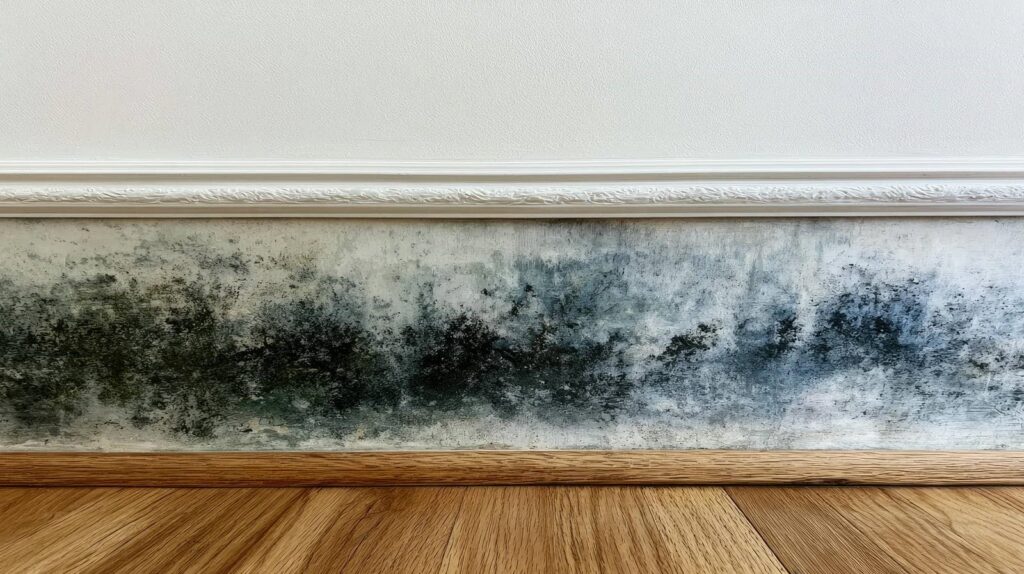
Mold After Water Damage can develop quickly if moisture isn’t addressed, often beginning within 24 to 48 hours. With humidity levels above 60%, mold thrives, making it essential to act fast after a leak or flood. Removing standing water, thoroughly drying affected areas, reducing indoor humidity, and inspecting for hidden moisture are key steps to protecting your home and preventing long-term mold growth. What immediate actions should you take to keep your space safe and mold-free?
Key Takeaways
- Remove standing water immediately using pumps or towels to prevent mold growth.
- Maintain relative humidity levels below 60% with dehumidifiers and fans.
- Inspect hidden areas like behind walls and under carpets for moisture.
- Use mold-resistant materials such as paints, insulation, and moisture barriers in vulnerable spaces.
- Conduct regular inspections and maintain proper ventilation in high-moisture areas.
How Water Damage Fuels Mold Growth?
When water damage occurs, it creates an ideal environment for mold to thrive, as mold spores need moisture to grow. Understanding the mold lifecycle is essential for prevention.
Mold begins as spores, which can remain dormant until they encounter moisture. Once activated, they proliferate rapidly, often within 24 to 48 hours.
If you don’t prioritize moisture control, you risk not only structural damage but also health issues. Keeping humidity levels low and ensuring proper ventilation can greatly hinder mold growth.
Regularly inspect areas prone to dampness, such as basements and bathrooms. By being proactive about moisture control, you can effectively disrupt the mold lifecycle and create a healthier living space for yourself and your community.
Immediate Actions to Take After Water Exposure
After experiencing water exposure, taking immediate action is essential to prevent mold growth and mitigate damage.
Start with water removal; swiftly eliminate standing water using pumps or towels. The quicker you act, the less chance mold has to take root.
Next, focus on humidity control. Use dehumidifiers and fans to lower moisture levels in affected areas, aiming for a relative humidity below 60%. This step is vital because high humidity fosters mold development.
Additionally, open windows and doors to increase airflow and promote drying.
Finally, inspect hidden areas like behind walls or under carpets, as mold can thrive in overlooked spots.
Effective Drying Techniques to Prevent Mold Growth
To effectively prevent mold growth, utilizing proper drying techniques is essential immediately following water damage. Start by using a dehumidifier to lower humidity levels, making it harder for mold to thrive. Position it in the affected area and run it continuously until the space feels dry.
Additionally, implement effective ventilation strategies. Open windows and doors to encourage airflow, or use fans to circulate air, which helps speed up the drying process.
Be sure to focus on hidden areas, like under carpets and behind walls, where moisture can linger. By combining dehumidifier usage with smart ventilation techniques, you greatly reduce the likelihood of mold taking hold, ensuring your space stays safe and comfortable for everyone.
How to Choose the Best Mold-Resistant Materials?
Choosing the right mold-resistant materials is essential for long-term protection against moisture-related issues.
Start by evaluating your space and determining which areas are most vulnerable.
Here are some key materials to take into account:
- Mold-resistant paints: These protect surfaces and add a layer of durability.
- Moisture barriers: Installing these can prevent moisture from seeping into walls and floors.
- Fiberglass insulation: Unlike traditional materials, it resists mold growth effectively.
- Cement board: Ideal for high-moisture areas, this material offers superior resistance.
Essential Maintenance Tips to Prevent Mold Growth
Maintaining a mold-free environment requires consistent attention and care, especially in areas prone to moisture.
Start by conducting regular inspections of your home, focusing on basements, bathrooms, and kitchens. Look for signs of dampness or leaks that could promote mold growth.
Confirm your ventilation systems are functioning properly; good airflow helps reduce humidity levels. Use dehumidifiers in high-moisture areas to keep humidity below 60%.
Clean and maintain gutters to prevent water accumulation near your foundation. When washing fabrics, dry them promptly to avoid lingering moisture.
Finally, be proactive about addressing any water damage immediately, as swift action can greatly reduce the risk of mold.
Frequently Asked Questions
How Long Does It Take for Mold to Grow After Water Damage?
Mold can start growing within 24 to 48 hours after water damage, depending on various factors like humidity, temperature, and material type. Understanding this mold growth timeline helps you respond quickly to minimize risks.
Can I Remove Mold Myself, or Should I Hire a Professional?
Better safe than sorry.” You can tackle small mold issues with DIY mold removal, but for extensive growth or health concerns, hiring professional services is wise. Your safety and home deserve the best care.
What Are the Health Risks Associated With Mold Exposure?
Mold exposure can trigger mold symptoms like respiratory issues and allergic reactions. Your immune response may weaken, leading to long-term effects. Implementing prevention strategies is essential for maintaining a healthy living environment and safeguarding your well-being.
Does Insurance Cover Mold Damage From Water Exposure?
Insurance typically covers mold damage if it’s a result of a covered peril, but check your policy coverage for specifics. Implementing mold prevention strategies can strengthen your claim and minimize future risks.
Are There Specific Temperatures That Inhibit Mold Growth?
Just as a gardener nurtures plants in ideal conditions, you can inhibit mold growth by maintaining temperature control between 32°F and 120°F. Keeping your space cool and dry helps create a welcoming environment for health.
Review
By staying proactive and attentive, you can sidestep the hidden pitfalls of mold growth that often follow water damage. Implementing swift drying techniques and selecting mold-resistant materials will serve as your armor. Regular maintenance checks will help keep your home in tip-top shape, ensuring you dodge those unpleasant surprises. Remember, a little vigilance today can save you from a much bigger headache tomorrow, allowing you to enjoy a safe and healthy living environment.