
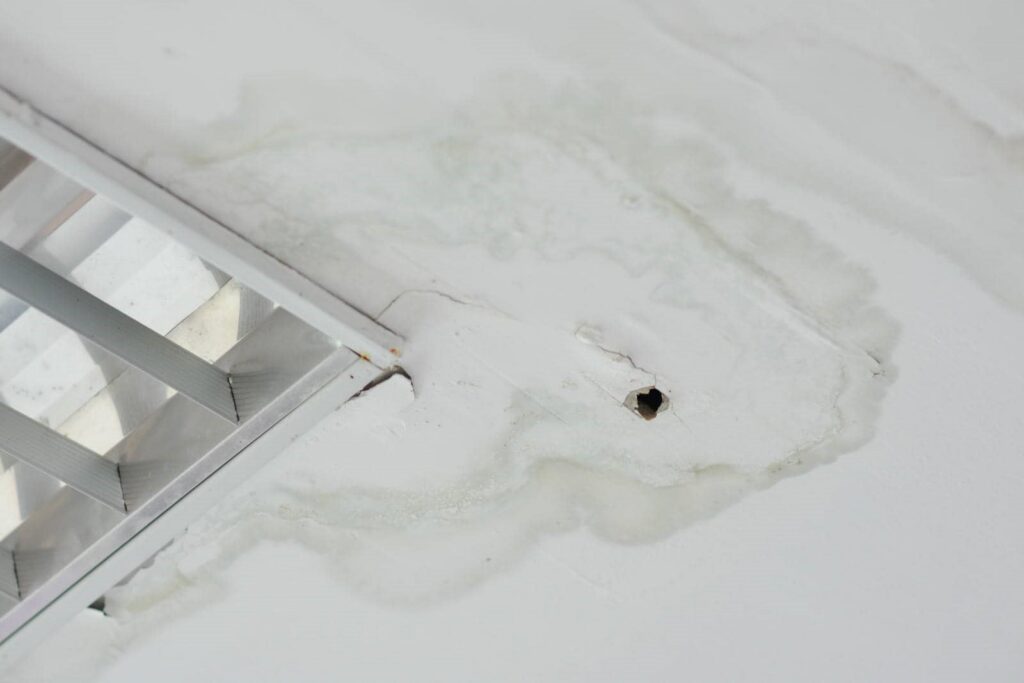
Ceiling water damage can feel like a disaster waiting to happen, and if you don’t act quickly, it could lead to bigger problems. You might be wondering how to tackle this issue effectively. Understanding how to spot the damage, fix it properly, and prevent future leaks is essential. Let’s explore the top five ways to repair ceiling water damage and ensure your home stays safe and dry.
Key Takeaways
- Assess the source of the leak thoroughly to prevent future damage before starting repairs.
- Remove damaged paint and debris from around the stain for a clean repair surface.
- Apply a stain-blocking primer to prevent discoloration from bleeding through the new paint.
- Use joint compound for deeper stains to create a smooth, even surface before painting.
- Ensure proper ventilation during and after repairs to mitigate future moisture buildup.
How to Spot Ceiling Water Damage Before It Gets Worse
How can you tell if your ceiling’s in trouble before it turns into a costly repair? Start by performing regular leak detection.
Look for dark spots or discoloration, which often signal water damage. Check for peeling paint or bulging areas—these can indicate moisture lurking beneath the surface. A thorough moisture assessment is essential; use a moisture meter if you suspect hidden issues.
Pay attention to musty odors, as they may suggest mold growth. Inspect the attic or roof space for leaks, especially after heavy rain.
If you notice any signs, act quickly to prevent further damage and protect your home. Staying vigilant can save you from escalating repairs and keep your living space safe and welcoming.
Fixing Water-Stained Ceilings: A Step-by-Step Guide
Fixing water-stained ceilings can be a straightforward process if you tackle it step by step.
First, perform a water damage assessment to pinpoint the source of the leak. Once you’ve resolved the issue, it’s time to prepare the area. Remove any loose paint or debris around the stain.
Next, apply a stain-blocking primer to prevent the water stain from bleeding through your new paint. After it dries, use ceiling repair techniques like patching with joint compound for deeper stains.
Sand the area smooth and apply your chosen ceiling paint. Finally, ensure proper ventilation to prevent future moisture buildup.
What Materials Do You Need for Ceiling Repairs?
To successfully repair a ceiling, you’ll need a variety of materials that ensure a smooth and lasting finish. Start with drywall or ceiling tiles, depending on your repair techniques.
You’ll also need joint compound for seamless blending, along with a putty knife for application. Don’t forget sandpaper for a smooth surface and primer to prep for painting.
For material selection, consider moisture-resistant options, especially if humidity is a concern. Paint that matches your ceiling’s color is essential for a cohesive look.
A drop cloth will help protect your floors, while a ladder ensures you can easily reach those tricky spots. With these materials on hand, you’re well-equipped to tackle your ceiling repair confidently.
Tips for Preventing Ceiling Water Damage
While you may not notice it immediately, preventing ceiling water damage is essential for maintaining the integrity of your home.
Start by implementing waterproofing techniques in areas prone to moisture, like bathrooms and kitchens. Always check for leaks in plumbing and roofs, addressing them promptly to avoid larger issues.
Regular maintenance is key; inspect your ceilings for stains, cracks, or dampness. Make sure your gutters are clean and functioning correctly to direct water away from your home.
Consider using dehumidifiers in humid areas to reduce moisture levels.
Finally, if you notice any signs of water damage, act quickly to avoid further complications. By taking these proactive steps, you’ll create a safer, more welcoming environment for you and your loved ones.
When to Call a Professional for Ceiling Repairs?
Wondering when it’s time to call in a professional for ceiling repairs? If you notice persistent water damage, like stains, peeling paint, or sagging areas, it’s essential to act quickly.
Repair signs such as mold growth or a musty odor indicate a more serious issue beneath the surface. If the damage spans a large area or you’re unsure about the source of the leak, don’t hesitate to reach out to an expert.
Professionals can assess the situation, ensuring proper repairs and preventing future issues. Remember, addressing water damage early can save you time, money, and stress down the road.
Trusting a skilled contractor restores your ceiling and keeps your home safe and comfortable.
Frequently Asked Questions
Can Ceiling Water Damage Affect Home Insurance Claims?
Yes, ceiling water damage can affect your home insurance claims. Insurers require a thorough damage assessment to determine your insurance coverage. Addressing the issue promptly helps ensure you receive the compensation you deserve.
How Long Does It Take for Water Stains to Appear?
When it rains, it pours; typically, you’ll see water stains within a few hours to a couple of days. These ceiling moisture indicators can signal underlying issues, so keep an eye on that water stain timeline.
Will Repairing the Ceiling Eliminate Mold Risks?
Yes, repairing the ceiling can greatly reduce mold risks. By prioritizing ceiling maintenance and implementing mold prevention strategies like proper ventilation and moisture control, you’ll create a healthier environment for yourself and your loved ones.
What Are the Signs of Hidden Water Damage?
You’ll notice signs of hidden water damage through discoloration, peeling paint, or warped ceilings. These can indicate mold growth and threaten your home’s structural integrity, so addressing them promptly is essential for your safety and comfort.
Can I Paint Over Water Stains Without Repairing?
You can’t just paint over water stains; many homeowners face recurring issues without proper water stain removal. Instead, use effective painting techniques for a lasting finish and prevent future damage.
Wrap-Up
In tackling ceiling water damage, you’re not just fixing a surface; you’re safeguarding your home’s integrity. By staying vigilant and following the steps outlined, you can prevent minor issues from turning into major headaches. Remember, it’s often the smallest leaks that can trigger the biggest problems. So, take action early, and don’t hesitate to call in the pros if the damage feels overwhelming. Your home deserves the best care, and you’re capable of providing it!