Mold Remediation in Water-Damaged Homes begins with a clear, systematic approach focused on eliminating excess moisture. Because mold thrives in damp environments, your first priority should be identifying and stopping the source of the water, then thoroughly drying all affected areas. Acting quickly helps limit mold growth and reduce further damage. Understanding how mold spreads, using proper removal techniques, and ensuring complete drying are essential steps to achieving a safe and effective remediation process.
Key Takeaways
- Act quickly to control moisture within 24-48 hours post-water damage to prevent mold growth.
- Wear protective gear like N95 respirators and gloves during mold removal.
- Isolate affected areas with plastic sheeting to prevent spore spread.
- Use effective cleaning solutions like vinegar or bleach according to manufacturer instructions.
- Maintain humidity levels between 30-60% and regularly inspect for leaks to prevent future growth.
How Mold Grows After Water Damage
When water damage occurs, mold can start to grow within 24 to 48 hours if conditions are right. Understanding the mold lifecycle is vital for effective moisture control.
Mold spores, present in the air, require moisture, warmth, and organic material to thrive. Once these conditions align, spores germinate, forming hyphae that penetrate surfaces. This leads to rapid growth, often unnoticed until significant damage occurs.
To prevent mold proliferation, it’s important to address water damage immediately and maintain low humidity levels. Use dehumidifiers, repair leaks, and ensure proper ventilation to disrupt the mold lifecycle.
Step-By-Step Guide to Removing Mold From Your Home
Before you start removing mold, it’s essential to prioritize safety.
Wear protective gear like gloves and masks to shield yourself from spores.
Once you’re prepared, you can implement effective removal techniques to eliminate the mold from your home.
Safety Precautions First
While tackling mold in your home, prioritizing safety precautions is essential to protect yourself and others. Mold spores can pose significant health risks, so taking the right steps is vital.
- Wear Protective Gear: Use N95 respirators, gloves, and goggles to shield yourself from inhaling mold spores.
- Ventilate the Area: Open windows and use fans to improve airflow, reducing exposure to harmful spores.
- Seal Off Affected Areas: Close doors and use plastic sheeting to contain mold spores and prevent them from spreading.
- Monitor Your Health: Keep an eye on any symptoms like coughing or skin irritation, and consult a doctor if issues arise.
Effective Removal Techniques
To effectively remove mold from your home, it’s essential to follow a systematic approach that ensures thoroughness and safety. Start by identifying areas of mold growth; use a flashlight to inspect hidden spots.
Next, isolate the affected area by sealing doors and vents to prevent spore spread. Wear protective gear to safeguard yourself during the process.
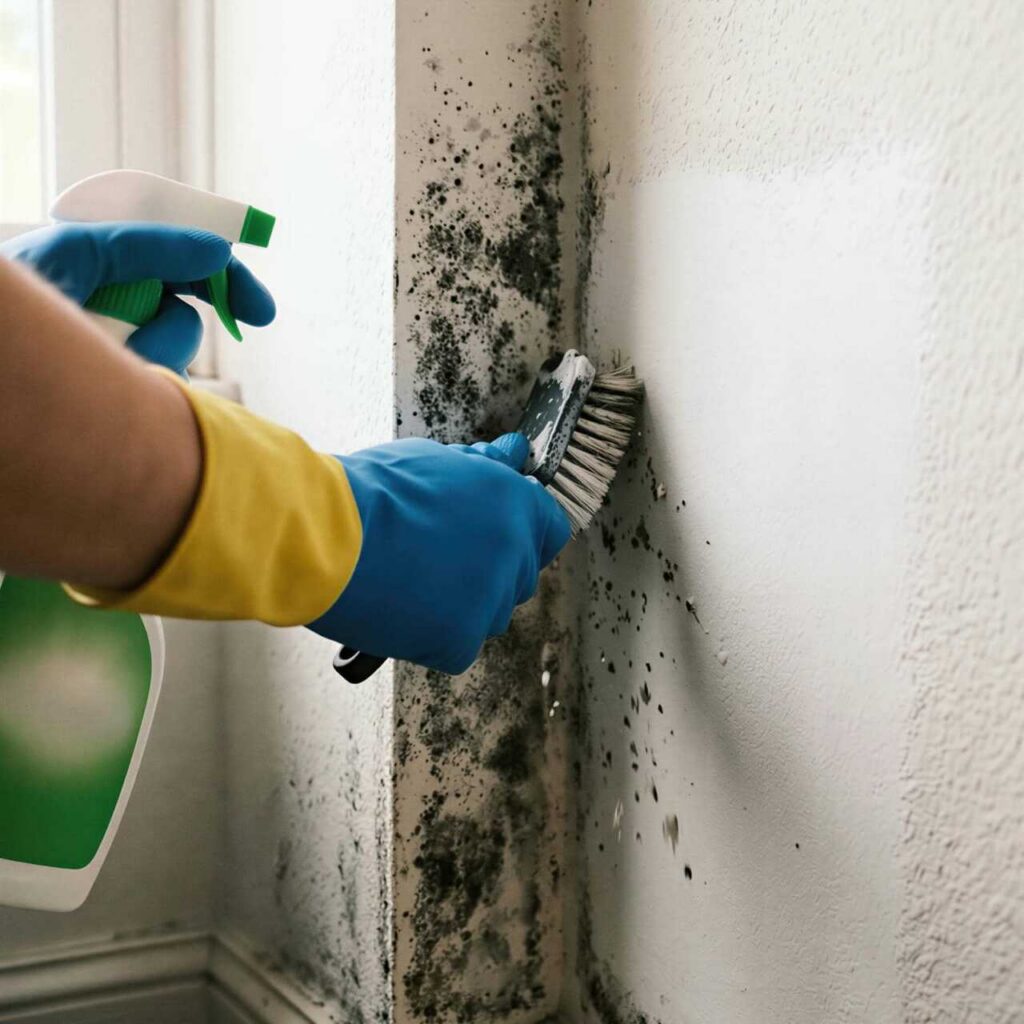
Use removal products specifically designed for mold, such as antifungal sprays or bleach solutions. Apply these products according to the manufacturer’s instructions, ensuring complete coverage. Scrub surfaces with a brush or cloth, then rinse thoroughly.
After cleaning, ensure adequate ventilation to dry the area and prevent future mold growth. Regularly monitor for signs of recurrence, and maintain humidity levels below 60% for lasting results.
Stay Safe: Key Tips for Mold Remediation
When tackling mold remediation, your safety’s paramount. Always wear personal protective equipment, such as gloves and masks, to minimize exposure.
Additionally, ensure proper ventilation techniques to reduce airborne spores during the process.
Personal Protective Equipment
- N95 Respirator: Filters out harmful airborne spores.
- Gloves: Use nitrile or rubber gloves to protect your skin from mold and chemicals.
- Goggles: Shield your eyes from irritants and contaminants.
- Protective Clothing: Wear long sleeves and pants to minimize skin exposure.
Proper Ventilation Techniques
Ensuring proper ventilation is essential for effective mold remediation, as it helps reduce airborne spores and moisture levels in the environment.
Start by evaluating your home’s ventilation systems; make sure they’re functioning correctly. Open windows and doors to promote air circulation, especially during dry days.
If possible, use exhaust fans in bathrooms and kitchens to expel humid air. Consider utilizing dehumidifiers to maintain ideal humidity levels, ideally below 60%.
Regularly check and clean your HVAC systems to prevent mold growth within them. Finally, keep vents clear of obstructions to enhance airflow.
Top DIY Cleaning Solutions for Mold Removal
Mold can wreak havoc on both your home and health, but effective DIY cleaning solutions can help you tackle this issue head-on.
Here are four effective options using natural ingredients:
- Vinegar Solution: Mix equal parts vinegar and water in a spray bottle. This solution kills most mold types without harsh chemicals.
- Baking Soda: Combine baking soda with water to form a paste. Apply it to moldy areas and scrub gently.
- Hydrogen Peroxide: Use a 3% hydrogen peroxide solution directly on the mold. Let it sit for 10 minutes before wiping clean.
- Essential Oils: Add a few drops of tea tree or citrus extracts to water for a fragrant mold-fighting spray.
These solutions are effective and promote a healthier living space.
Drying Water-Damaged Areas
After addressing mold with effective DIY cleaning solutions, the next step is to focus on drying water-damaged areas promptly.
Moisture control is essential in preventing further damage and mold growth. Start by using high-powered drying equipment, such as dehumidifiers and fans, to enhance airflow and expedite the drying process.
Make sure you target all affected areas, including walls, floors, and furniture. Check hidden spots like under carpets and behind cabinets, as moisture often lingers there.
Monitor humidity levels regularly; aim for a relative humidity below 60%.
Preventing Future Mold Growth in Your Home
To effectively prevent future mold growth in your home, it’s crucial to address moisture sources proactively.
Implementing the following strategies can help you maintain a mold-free environment:
- Use mold-resistant materials for drywall and insulation, especially in moisture-prone areas.
- Control humidity levels to stay between 30-60% by using dehumidifiers and exhaust fans.
- Regularly inspect plumbing for leaks or condensation, repairing any issues immediately.
- Ensure proper ventilation in bathrooms, kitchens, and basements to promote air circulation.
When to Call for Professional Mold Removal Services
How can you tell when it’s time to call in the experts for mold removal? If you notice persistent mold growth despite your efforts, it’s a clear sign to seek professional help.
Mold health effects can escalate quickly, causing respiratory issues and allergies if left unchecked. Furthermore, if the affected area exceeds 10 square feet, it’s best to consult specialists.
They employ advanced mold detection methods, like moisture meters and air sampling, to assess the problem thoroughly. If you or your family members are experiencing unexplained health symptoms, don’t hesitate to reach out.
Professionals can ensure safe removal and prevent future growth, helping you reclaim a healthy living environment. Trust your instincts; your well-being matters.
Frequently Asked Questions
How Long Does It Take for Mold to Grow After Water Exposure?
Mold can start growing within 24 to 48 hours after water exposure, depending on water damage factors like humidity and temperature. Understanding this mold growth timeline helps you act quickly to mitigate potential health risks.
Can Mold Affect My Health Even if I Can’T See It?
Mold’s like a silent whisper, lurking unseen. Yes, it can affect your health even if it’s invisible. Watch for mold symptoms, as hidden spores pose serious health risks, impacting your well-being and comfort at home.
What Materials Are Most Susceptible to Mold Growth?
Materials like wood, drywall, and carpet are most susceptible to mold growth. Implementing moisture control solutions and effective mold prevention techniques helps protect these surfaces, ensuring a healthier environment for you and your loved ones.
How Can I Identify Hidden Mold in My Home?
To identify hidden mold, use mold detection techniques like visual inspections and moisture assessment tools, such as hygrometers. Check areas prone to dampness, like basements and behind appliances, to uncover potential growth.
Are There Any Natural Remedies to Prevent Mold Growth?
You can use natural antifungal solutions like vinegar and baking soda to combat mold. Essential oil treatments, such as tea tree or lavender oil, also help prevent growth. Embrace these methods for a healthier home environment.
Conclusion
Effective mold remediation requires swift action and proper techniques. By controlling moisture, utilizing safe cleaning solutions, and maintaining humidity levels, you can safeguard your home from future growth. But have you considered how a small leak today could lead to significant mold problems tomorrow? Stay vigilant and proactive to protect your living space. If the situation escalates, don’t hesitate to call professionals who can ensure thorough remediation and peace of mind.