When faced with the aftermath of flooding, knowing the right water extraction techniques can greatly impact recovery efforts. You’ll find that tools like submersible pumps and wet/dry vacuums play essential roles in efficiently removing water from affected areas. Understanding how each method works can help you choose the best approach for your situation. Let’s explore these techniques and see how they can aid in minimizing damage and facilitating restoration.
Key Takeaways
- Submersible pumps are effective for rapidly removing large volumes of water from flooded areas with high-capacity discharge capabilities.
- Wet/dry vacuums are versatile tools for various tasks, with portable models suited for tight spaces and larger units for higher capacity.
- Truck-mounted water extractors provide mobility and efficiency for rapid water removal, minimizing secondary damage from prolonged exposure.
- Portable water extraction units are lightweight and easy to transport, making them ideal for challenging environments and quick setups.
- Dehumidifiers play a crucial role in moisture control, preventing mold growth and accelerating the drying process during flood recovery.
Submersible Pumps
Submersible pumps are vital tools in flood recovery, designed to efficiently remove water from flooded areas. These pumps boast key features like high-capacity discharge and durable construction, allowing you to tackle challenging conditions with confidence.
When you choose a submersible pump, look for models with corrosion-resistant materials and reliable seals to ensure longevity and consistent performance.
Proper maintenance is essential for maximizing the effectiveness of your submersible pump. Regularly inspect and clean the pump to prevent debris buildup that could hinder operation.
You should also check the power supply and verify that all electrical connections are secure. Remember, a well-maintained pump performs better and lasts longer, saving you time and money in the long run.
Wet/Dry Vacuums
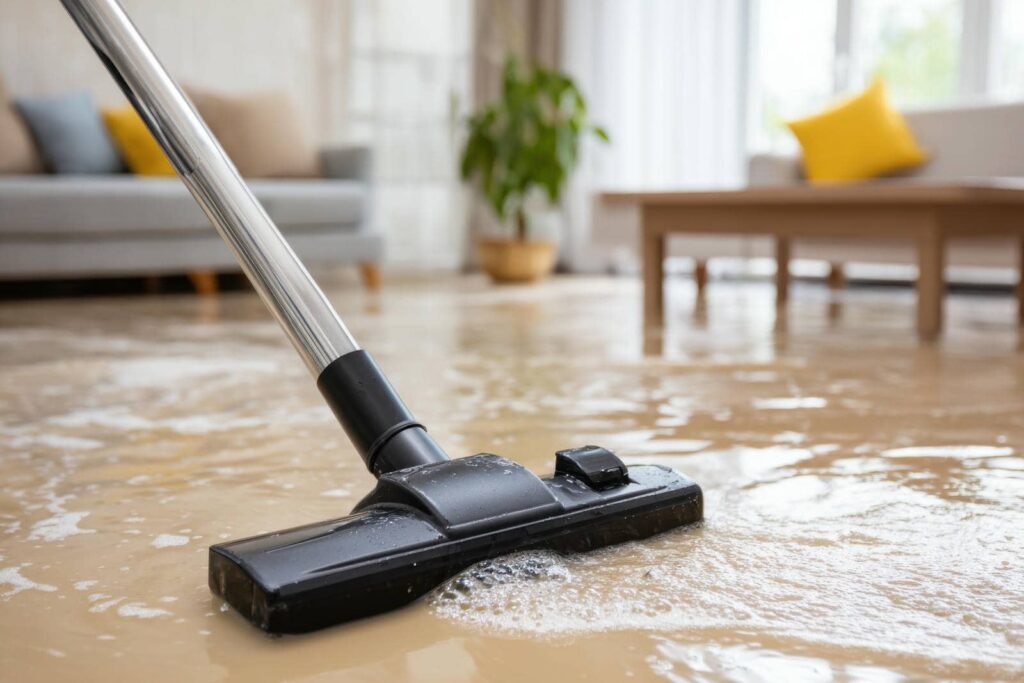
When facing flood recovery, choosing the right wet/dry vacuum can make a significant difference in efficiency.
You’ll find various types designed for different tasks, so understanding their features is essential.
Additionally, following best practices for usage ensures you maximize their effectiveness while minimizing damage to your property.
Types of Wet/Dry Vacuums
Several types of wet/dry vacuums are available, each designed to tackle specific challenges during flood recovery.
For instance, portable models are great for tight spaces, while larger units offer higher capacity for extensive water removal.
When selecting a vacuum, pay attention to key wet/dry vacuum features like horsepower, tank size, and filtration systems. These factors influence efficiency and effectiveness.
Remember to follow vacuum maintenance tips, such as regularly cleaning filters and inspecting hoses for blockages, to ensure optimal performance.
Best Practices for Usage
Using a wet/dry vacuum effectively can greatly impact your flood recovery process. Start by selecting the right vacuum for your needs, ensuring it has sufficient power and capacity.
Before beginning, remove any furniture and debris to create a clear workspace. As you vacuum, use effective techniques like starting at the farthest point from your exit and working your way back. This helps in avoiding water from spreading.
Remember to periodically empty the tank to maintain suction efficiency. After you’ve extracted the water, allow the area to dry completely to prevent mold growth.
Truck-Mounted Water Extractors
Truck-mounted water extractors are essential tools for efficient flood recovery, capable of removing large volumes of water quickly and effectively.
These machines offer significant truck-mounted advantages, such as mobility and high extraction efficiency, allowing you to address flooded areas promptly. With their powerful pumps and large storage tanks, you can tackle substantial water removal tasks in a fraction of the time compared to other methods.
Using a truck-mounted extractor, you’ll find that the setup is streamlined, enabling you to move from one affected location to another without delay. This efficiency saves time while minimizing the risk of secondary damage from prolonged water exposure.
You’ll feel a sense of relief knowing that you have the right equipment to support your community in recovery efforts. Investing in truck-mounted water extractors ensures you’re well-equipped to restore safety and comfort to those impacted by flooding.
Portable Water Extraction Units
Portable water extraction units are invaluable assets for flood recovery operations, offering flexibility and ease of use in challenging environments.
These mobile extraction solutions provide significant advantages that can make a real difference in your recovery efforts.
Here are four key portable unit advantages:
Ease of Transport: Lightweight design allows you to move them easily to affected areas.
Quick Setup: You can deploy them rapidly, minimizing downtime and maximizing efficiency.
Versatile Usage: They can handle various types of water, from clean to contaminated, making them adaptable to different situations.
Cost-Effective: Investing in portable units often reduces labor costs and speeds up recovery times.
Dehumidifiers
Dehumidifiers play an essential role in flood recovery by efficiently removing excess moisture from the air.
Understanding the different types available, their benefits, and how to use them properly can greatly enhance your recovery efforts.
Let’s explore how to effectively utilize these devices to create a safer, drier environment.
Types of Dehumidifiers
When dealing with flood recovery, understanding the various types of dehumidifiers can greatly impact your restoration efforts.
Selecting the right dehumidifier enhances energy efficiency and accelerates drying. Here are four common dehumidifier types you should consider:
Refrigerant Dehumidifiers: These work by cooling the air, causing moisture to condense. They’re effective in moderate climates.
Desiccant Dehumidifiers: Utilizing moisture-absorbing materials, these are ideal for colder environments.
Electronic Dehumidifiers: These units use a fan and a heat exchanger, providing energy-efficient moisture removal.
Industrial Dehumidifiers: Designed for larger spaces, these heavy-duty units tackle significant moisture levels effectively.
Benefits of Dehumidification
After selecting the right type of dehumidifier for your flood recovery, it’s important to recognize the significant benefits that dehumidification brings to the restoration process.
One of the primary dehumidification advantages is effective moisture control, which prevents secondary damage like mold growth and structural deterioration. By maintaining ideal humidity levels, you create a healthier environment for you and your loved ones, reducing health risks associated with dampness.
Additionally, dehumidifiers accelerate the drying process, allowing you to reclaim your space more quickly. This saves time and minimizes the overall cost of repairs.
Embracing dehumidification during your recovery journey fosters a sense of security, knowing you’re taking proactive steps toward a safe, dry home.
Proper Usage Tips
To maximize the effectiveness of your dehumidifier during flood recovery, it’s crucial to position it correctly within your space.
Proper placement enhances extraction efficiency and promotes water safety for you and your loved ones.
Follow these tips:
Place near water sources: Position the dehumidifier close to areas with the most moisture.
Keep doors and windows closed: This prevents outside humidity from interfering with the dehumidification process.
Elevate off the ground: Use a sturdy platform to improve airflow and efficiency.
Regularly empty the tank: This ensures continuous operation and maximizes moisture removal.
Air Movers
Air movers play an essential role in flood recovery by enhancing airflow and accelerating the drying process of water-damaged areas. When you use air movers, you help maintain ideal moisture control, which is vital for preventing mold growth and further damage.
Position these devices strategically to maximize airflow across wet surfaces, ensuring moisture evaporates quickly and efficiently. You’ll want to adjust the angle and speed of the air movers to suit different areas, whether it’s a carpet, wall, or hard surface.
By creating a continuous flow of air, you speed up drying and promote a healthier environment for you and your loved ones. Remember to monitor the moisture levels regularly; this way, you can make certain that you’re effectively managing the drying process.
With the right approach, air movers can greatly aid your flood recovery efforts and restore a sense of normalcy in your home.
Thermal Imaging Technology
While air movers play a significant role in drying out water-damaged areas, thermal imaging technology takes flood recovery a step further by identifying hidden moisture.
This innovative tool allows you to see what’s not visible to the naked eye, ensuring thorough moisture detection solutions.
Here are four key thermal imaging applications you should consider:
- Wall Inspections: Detect moisture behind walls without causing damage.
- Ceiling Checks: Identify leaks and moisture accumulation in ceilings.
- Floor Analysis: Assess water presence under flooring materials.
- Energy Efficiency: Find areas of heat loss, helping to optimize restoration efforts.
Frequently Asked Questions
How Long Does It Take to Recover From Flood Damage?
Recovering from flood damage typically takes weeks to months. You’ll need to use damage assessment techniques to evaluate the situation, which affects your flood recovery timeline. Patience and thoroughness will help you navigate this challenging process.
What Are the Health Risks Associated With Floodwater?
Floodwater can contain over 70 types of contaminants, posing serious health hazards. You’re at risk for infections, gastrointestinal issues, and respiratory problems. It’s vital to avoid exposure and seek professional help for safe recovery.
Can I Use My Home Insurance for Flood Recovery?
Yes, you can use your home insurance for flood recovery if your policy includes flood insurance. Review your coverage details and follow the claim process carefully to ensure you receive the support you need.
What Should I Do Before Extraction Begins?
Before extraction begins, prioritize safety precautions like wearing protective gear. Conduct a thorough property assessment, noting damage and potential hazards. For instance, after heavy rains, you might find structural issues needing immediate attention before extraction starts.
How Can I Prevent Future Flooding in My Home?
To prevent future flooding in your home, implement effective drainage solutions and apply proper landscaping techniques. Elevate soil around your property, clear gutters regularly, and install drainage systems to redirect water away from your foundation.
Final Thoughts
In the aftermath of a flood, envision the swift dance of submersible pumps and wet/dry vacuums as they tirelessly siphon away murky waters, restoring your space. Truck-mounted extractors roar to life, their powerful suction pulling away despair and leaving hope in their wake. With portable units at your side, you navigate tight corners, while dehumidifiers and air movers create a fresh, breathable atmosphere. Together, these techniques lay the groundwork for a resilient recovery, transforming chaos back into comfort.