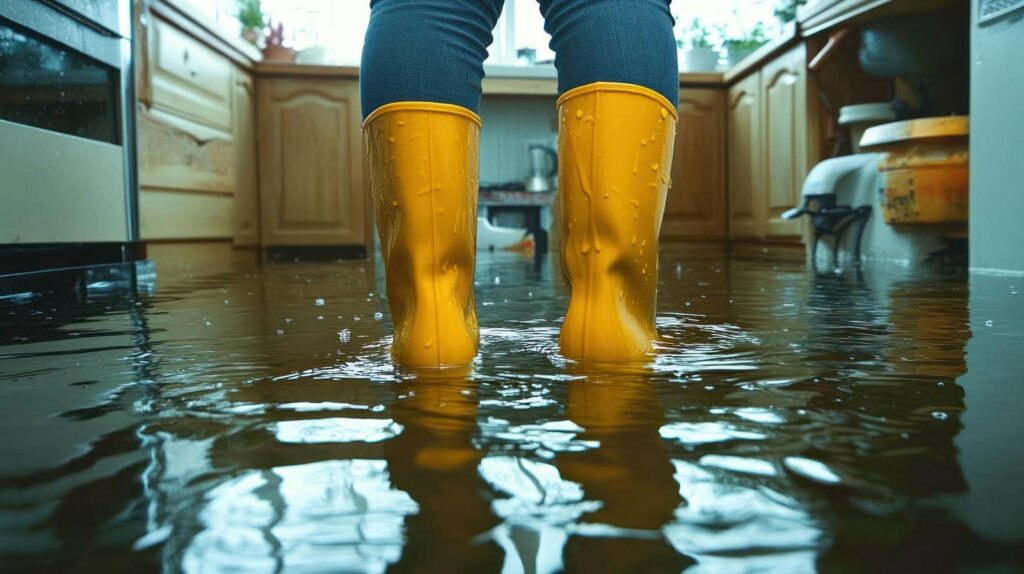
Imagine waking up to find your basement flooded after a heavy rain. You’ll need a clear plan to tackle the situation efficiently. First, shutting off the main water supply is vital to prevent further damage. Next, you’ll want to remove standing water using pumps or buckets. But that’s just the beginning. Understanding the right tools and techniques can make all the difference in preventing long-term issues. Let’s explore the essential steps for effective water cleanup.
Key Takeaways
- Quickly shut off the main water supply to prevent further flooding in your home.
- Use a suction pump or buckets to remove standing water effectively and safely.
- Open windows and use fans to enhance airflow and expedite the drying process.
- Deploy dehumidifiers to extract excess moisture from the air and maintain humidity below 60%.
- Document damage with photos for insurance claims and assess structural integrity post-cleanup.
How to Address Water Damage Quickly: A Step-by-Step Guide
When water damage strikes your home, acting swiftly can make all the difference. First, initiate your emergency response by shutting off the main water supply to prevent further flooding.
Next, document the damage with photos for your insurance claims; this step is essential for a smooth process later. Remove any standing water using pumps or buckets, and make sure you wear protective gear.
Once the area’s clear, focus on drying out affected materials—open windows and use fans to enhance airflow.
After drying, assess the structural integrity; any compromised elements should be reported to your insurance provider.
Finally, maintain open communication with your insurer throughout, guaranteeing you understand your coverage for repairs and restoration.
Must-Have Tools for Effective Water Cleanup
Effective water cleanup requires a specific set of tools to tackle the damage efficiently.
First, a suction pump is essential for removing standing water quickly. This powerful device can extract large volumes, minimizing further damage to your property.
Next, a moisture meter is vital for evaluating moisture levels in walls and floors. It helps you identify hidden dampness, preventing mold growth and ensuring thorough drying.
Additionally, a good set of fans and dehumidifiers can expedite the drying process.
Don’t forget about protective gear, like gloves and masks, to keep yourself safe during cleanup.
Best Drying Techniques After Water Cleanup
After gathering the right tools for water cleanup, the next step involves implementing effective drying techniques to prevent long-term damage.
Start by enhancing airflow management; open windows and doors to promote circulation. Use fans strategically to direct airflow toward wet areas, ensuring moisture control. If available, set up dehumidifiers to extract excess humidity from the air.
Monitor the drying process regularly, checking for dampness in hidden spaces like behind walls or under furniture. Consider using moisture meters to assess progress accurately.
Finally, maintain a consistent temperature in the affected areas to hasten evaporation. Following these drying techniques not only safeguards your home but also fosters a sense of community, as you take proactive steps to protect your living environment.
Drying and Dehumidifying Best Practices
To effectively dry your space after water damage, you need to implement targeted drying methods alongside strategic dehumidifier use.
Guarantee ideal airflow by positioning fans and vents to facilitate moisture removal.
Effective Drying Methods
When dealing with water damage, swift and efficient drying is essential to prevent mold growth and structural damage.
Start by guaranteeing ideal air circulation; open windows and doors to create a cross breeze. Use fans to accelerate drying, placing them strategically to direct airflow toward wet areas.
For effective moisture control, incorporate absorbent materials like towels or mops to remove excess water. Verify that you monitor humidity levels regularly, aiming for a range below 60%.
If possible, elevate furniture and belongings from wet surfaces to facilitate drying.
Dehumidifier Usage Tips
While you’re managing water damage, using a dehumidifier effectively can greatly enhance the drying process.
Start by ensuring proper dehumidifier placement; position it in the most affected area to maximize moisture extraction. Avoid placing it against walls or furniture, as this restricts airflow.
Monitor humidity control regularly; aim for a level below 50% for ideal results. If possible, run the dehumidifier continuously for the first few days to expedite drying.
Empty the water reservoir frequently, or connect a drain hose for convenience. Close windows and doors to prevent outside humidity from interfering with the drying process.
Following these tips will help you maintain an effective dehumidifying environment, fostering a healthier home post-water damage.
Airflow Optimization Techniques
Effective airflow is essential for ideal drying and dehumidifying in water-damaged areas. To optimize airflow circulation and enhance moisture control, follow these best practices:
Open Windows and Doors: Create cross-ventilation to encourage fresh air flow and expedite drying.
Use Fans Strategically: Position box or oscillating fans to direct airflow towards damp surfaces, ensuring thorough drying.
Elevate Furniture: Lift furniture off the floor to allow air to circulate underneath, preventing mold growth.
Monitor Humidity Levels: Use a hygrometer to keep humidity below 60%, adjusting your dehumidifier as needed.
How to Keep Your Home Safe From Future Water Damage?
To keep your home safe from future water damage, implement regular maintenance checks to identify potential leaks or issues early.
Installing proper drainage systems around your property can effectively direct water away from your foundation.
Regular Maintenance Checks
Inspect plumbing: Regularly check for leaks in pipes and fixtures to guarantee early leak detection.
Examine roofing: Look for missing shingles or cracks that could lead to water intrusion.
Check gutters: Clean and inspect gutters to prevent overflow, which can cause foundation issues.
Monitor humidity: Use dehumidifiers in damp areas to help with mold prevention and maintain indoor air quality.
Install Proper Drainage Systems
While many homeowners focus on preventative measures, installing proper drainage systems is vital for safeguarding against future water damage.
Start by evaluating your property’s layout to determine the best drainage types for your needs, such as surface drains, French drains, or sump pumps. Make sure that downspouts direct water at least five feet away from your foundation.
When installing these systems, consider using perforated pipes to efficiently channel excess water. It’s also important to maintain a slope away from your home’s foundation.
Regularly check and clear any debris from drainage areas to prevent clogs. By following these installation tips, you’ll not only protect your home but also foster a sense of security within your community.
When to Call Water Cleanup Professionals?
When should you consider calling water cleanup professionals? It’s vital to act swiftly when facing water damage, as delays can lead to further complications. Here are some situations to guide your decision:
Severe Water Damage: If there’s extensive flooding or significant leaks.
Mold Growth: Notice mold or mildew? This can pose health risks.
Structural Concerns: If you suspect the integrity of your home is compromised.
Insufficient Cleanup: When DIY efforts aren’t effectively addressing the issue.
In these cases, restoration services are essential for thorough assessment and remediation.
Professionals have the expertise and equipment necessary to fully restore your home, ensuring safety and preventing future issues.
Don’t hesitate your home deserves the best care.
Frequently Asked Questions
Can I Use Regular Household Fans for Drying Water-Damaged Areas?
Yes, you can use regular household fans for drying water-damaged areas. However, their fan efficiency might be lower than specialized equipment. Combine them with effective drying techniques for ideal results and quicker moisture removal.
How Long Does It Take for a Home to Dry Completely?
It typically takes 3 to 5 days for a home to dry completely, depending on moisture levels and ventilation. Using dehumidifiers and fans can markedly reduce drying time, ensuring your space returns to normal quickly.
What Are the Signs of Hidden Water Damage?
You’ll notice signs of hidden water damage through discoloration, peeling paint, or warped surfaces. Conducting leak detection and moisture assessment can uncover underlying issues, helping you maintain a safe, dry, and comfortable living environment.
Is It Safe to Stay in My Home During Cleanup?
It’s generally unsafe to stay during cleanup. Water safety is essential; contaminants can linger. Follow cleanup precautions, like wearing protective gear and ensuring proper ventilation, to minimize health risks while professionals handle the situation.
How Can I Prevent Mold Growth After Water Damage?
How can you stop mold growth after water damage? Focus on moisture control: promptly dry affected areas, use dehumidifiers, and guarantee proper ventilation. Regularly inspect for leaks to maintain effective mold prevention in your home.
Final Thoughts
In the aftermath of water damage, think of your home as a resilient ship steering through stormy seas. By swiftly implementing the cleanup techniques outlined, you’re not just bailing out water; you’re charting a course toward restoration. Each tool and drying method acts as a sturdy oar, propelling you toward safety. Remember, the vigilance you show now can help keep your vessel seaworthy, protecting your sanctuary from future tempests. Don’t hesitate to reach out to professionals when the waves get too high.