
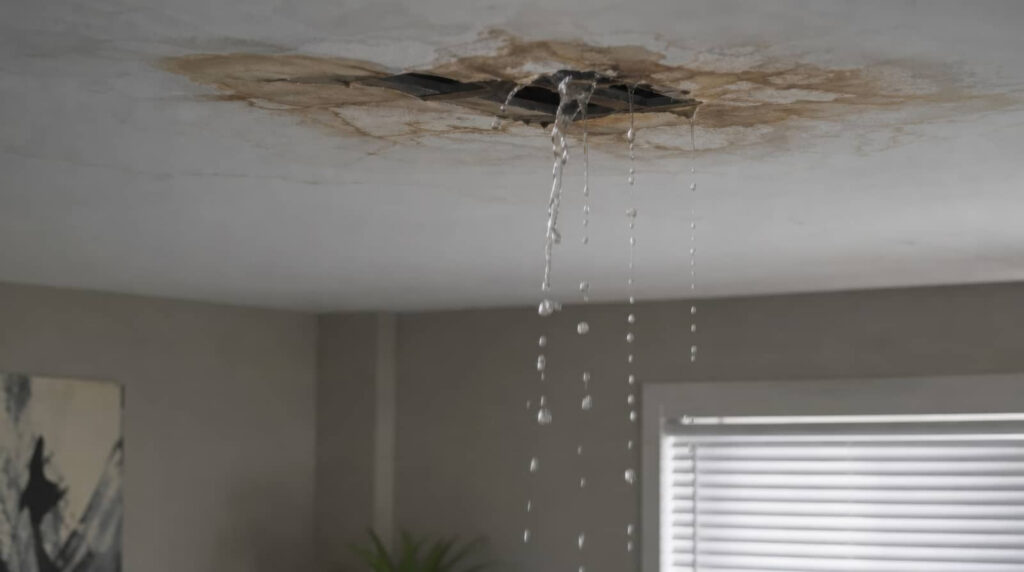
If your kitchen ceiling starts dripping during dinner, you need to act fast. Clean Up Leaks by shutting off the source, catching the water, and keeping the room safe, then dry the affected surface before moisture spreads. But stopping the leak is only the first step. Ceiling stains, sagging, and cracks can be signs that hidden moisture or damage is still present, so checking the area carefully can help prevent a much bigger problem.
Key Takeaways
- Shut off the water source immediately to stop the leak and prevent more damage.
- Use a bucket or container to control dripping and protect surrounding areas.
- Dry wet surfaces quickly with towels, fans, open windows, or a dehumidifier.
- Use temporary fixes like plumber’s tape, clamps, or epoxy putty for small leaks.
- Monitor the area closely and repair any ceiling or wall damage once everything is dry.
Stop the Leak and Protect the Room
First, shut off the water source to stop the leak at its origin.
Then you can inspect the damaged area and decide whether a fitting, joint, or surface needs immediate attention.
If you can’t make a permanent repair right away, use temporary fixes like plumber’s tape, a clamp, or epoxy putty to slow the flow.
For small cracks, review sealant options that match the material, such as silicone or acrylic, and apply them only after you’ve cleaned the surface.
Protect the room by moving items away from the leak and covering nearby electronics or furniture with plastic.
Keep a bucket under the drip so you stay in control.
You’re not alone here; these quick steps help your space stay safe until you’re ready for a full repair.
Dry the Ceiling Quickly
Pat the ceiling dry as soon as the leak stops so moisture doesn’t spread into the drywall or insulation.
Use clean towels or microfiber cloths and press, don’t rub, to lift surface water without damaging the finish.
Set up ceiling fans to move air across the wet area, and open nearby windows if outside air is dry.
If the room has a dehumidifier, run it right away.
Place moisture absorbents in shallow trays below the damp zone to catch lingering humidity.
Keep furniture and rugs out of the airflow path so drying stays efficient.
Check the ceiling every 15 to 20 minutes, and swap out wet cloths before they saturate.
You’re helping the space recover faster, and your room stays safer for everyone who uses it.
Repair Ceiling Stains, Sagging, and Cracks
Once the ceiling is dry, inspect the surface for stains, sagging, or hairline cracks that point to lingering moisture or damaged drywall.
If you see brown rings, apply a stain-blocking primer before painting; that keeps bleed-through from ruining your finish.
For light sagging, cut away loose material and add backing where needed, then fasten new drywall securely.
For cracks, widen them slightly with a utility knife, fill with joint compound, tape the seam, and sand smooth after it cures.
If the area feels soft, replace the panel instead of patching it.
Good ceiling repair depends on steady prep, not shortcuts.
You’re not just fixing damage—you’re restoring a clean, solid space that feels like home.
Frequently Asked Questions
How Can I Tell if a Leak Is Coming From Plumbing or the Roof?
Check where the leak starts: if water drips near pipes, valves, or fixtures, you likely need a plumbing inspection; if stains spread from ceilings, walls, or attic, schedule a roof assessment.
What Tools Should I Keep Ready for Emergency Leak Cleanup?
You should keep a flashlight, towels, buckets, a wet vac, plastic sheeting, leak detection dye, and gloves ready. These emergency supplies support cleanup techniques, water extraction, damage assessment, and quick repair options.
How Do I Find Hidden Water Damage Behind Walls?
You’ll find hidden damage with water detection tools, then do moisture mapping across the wall surface. Check for stains, swelling, odor, and cool spots. If readings spike, open a small inspection hole carefully.
When Should I Call a Professional for a Leak?
You should call a professional when a leak looks like a flood, won’t stop, or spreads fast. If you need leak detection or a plumbing inspection, you’ll save time, money, and stress.
Can a Small Leak Cause Mold Growth Quickly?
Yes, a small leak can cause mold growth quickly if you don’t act. You should use leak detection quickly, dry materials completely, and prioritize mold prevention. Your home stays safer when you fix moisture early.
Conclusion
When you spot a leak, act fast: shut off the water, catch the drip, and protect the room. Then dry the ceiling and surrounding surfaces with towels, fans, and a dehumidifier, because wet material can turn into hidden damage. Next, repair stains, sagging, and cracks before they spread. You’re not just cleaning up water; you’re stopping mold, structural damage, and bigger repair bills. Quick action now saves time, money, and stress later.