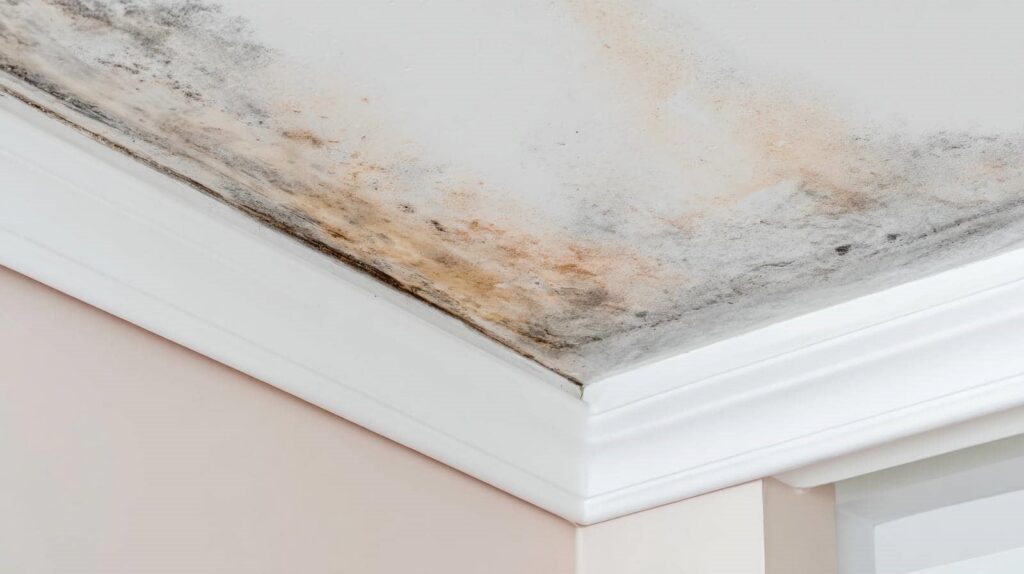
Imagine lifting your gaze to a ceiling marred by unsightly water stains and peeling paint, a clear signal that something’s amiss. To effectively assess the extent of ceiling water damage, you’ll need to adopt a systematic approach. From identifying visible signs to checking for mold, each step reveals critical information. But understanding the full scope often requires more than just a quick glance; there are deeper issues lurking that need your attention.
Key Takeaways
- Look for visible water stains on the ceiling, indicating potential leaks or moisture intrusion.
- Check for mold and mildew growth, identifiable by dark spots and a musty smell.
- Use moisture meters for accurate assessments of moisture levels in materials.
- Inspect the ceiling framework for signs of warping, discoloration, or soft spots.
- Consult a professional for a thorough inspection and long-term solutions to prevent future damage.
Identify Visible Signs of Ceiling Water Damage
When you look up at your ceiling, it’s crucial to recognize the visible signs of water damage, as early detection can prevent more extensive issues.
Pay close attention to water stains, which often appear as discolored patches varying in color from yellow to brown. These stains usually indicate a leak or moisture intrusion.
Additionally, you might notice peeling paint, which often occurs when moisture seeps beneath the surface, causing the paint to lose adhesion. This issue not only affects aesthetics but can also signal structural damage if left unchecked.
Regularly inspecting your ceiling for these signs helps maintain your home’s integrity and guarantees a safe living environment for you and your loved ones.
Identify Mold and Mildew Growth
After identifying visible signs of ceiling water damage, it’s important to check for mold and mildew growth, which can develop quickly in damp environments.
Look for dark spots, a musty smell, or discoloration on the ceiling. These indicators can signal underlying moisture issues.
If you find mold, take immediate action; mold remediation is vital for your health and the integrity of your home. Use proper protective gear and consider consulting professionals for extensive infestations.
To prevent future growth, implement prevention strategies such as improving ventilation, using dehumidifiers, and fixing leaks promptly.
Regular inspections can help you catch potential problems early, ensuring a safe and healthy living space for you and your loved ones.
Use Moisture Meters for Accurate Readings
To accurately assess ceiling water damage, utilizing moisture meters is essential, as these tools provide precise readings of moisture levels hidden within materials.
Understanding the different moisture meter types can help you choose the right one for your situation.
When using a moisture meter, keep these key points in mind:
Pin-type meters: Great for measuring moisture in wood and drywall.
Pinless meters: Ideal for scanning large areas without damaging surfaces.
Calibration: Confirm your device is regularly calibrated for accurate readings.
Subsurface measurements: Consider meters that can assess moisture levels below the surface.
Examine the Ceiling Framework for Hidden Damage
A thorough examination of the ceiling framework is essential in identifying hidden damage that may not be immediately visible.
Start by inspecting the structural elements, such as beams and joists, for signs of warping or decay. Check the condition of the ceiling materials—drywall, plaster, or wood panels—looking for discoloration or soft spots.
Pay special attention to areas around fixtures and joints, where water may accumulate unnoticed. Assess the overall structural integrity; even minor damage can compromise stability.
Use a flashlight to illuminate dark corners and guarantee you’re not missing subtle issues. By being meticulous in your evaluation, you’ll better understand the extent of potential repairs needed to maintain the safety and durability of your ceiling.
Consult a Professional for Comprehensive Assessment
Even after thoroughly examining the ceiling framework for hidden damage, it’s wise to consult a professional for a thorough assessment.
Experts can provide insights that you might overlook, ensuring you address all aspects of the issue.
Here are key benefits of involving a professional:
Comprehensive Inspection: They utilize specialized tools to detect moisture and structural damage.
Accurate Damage Estimation: Professionals can help gauge the extent of damage, influencing repair costs.
Guidance on Insurance Claims: They can assist in documenting damage for successful claims.
Long-term Solutions: Experts offer advice on preventing future water damage, enhancing your home’s durability.
Frequently Asked Questions
How Can I Prevent Ceiling Water Damage in the Future?
To prevent ceiling water damage, focus on moisture control, conduct regular inspections, maintain your roof, and perform plumbing checks. These proactive measures will help you identify issues early, ensuring a safe, dry living environment.
What Are the Long-Term Effects of Untreated Ceiling Water Damage?
Untreated ceiling water damage’s like a slow poison, inviting mold growth and compromising structural integrity. Over time, you’ll face health risks and costly repairs, undermining your home’s safety and comfort. Don’t let it linger.
Is Ceiling Water Damage Covered by Homeowners Insurance?
Yes, ceiling water damage is often covered by homeowners insurance, but it depends on your policy coverage. You’ll need to file insurance claims promptly and provide documentation to support your case for coverage.
How Quickly Should I Act After Discovering Water Damage?
When water’s creeping in like a thief in the night, act fast! Conduct immediate water leak detection and moisture evaluation. The sooner you respond, the more damage you prevent, protecting your home and peace of mind.
Can I Repair Ceiling Water Damage Myself?
Yes, you can handle DIY repairs for ceiling water damage. Start with a thorough damage assessment to identify affected areas, then patch, repaint, or replace materials as needed just make sure you follow safety guidelines throughout the process.
Final Thoughts
In evaluating ceiling water damage, remember that a stitch in time saves nine. By identifying visible signs, checking for mold, using moisture meters, and examining the framework, you’re taking proactive steps to safeguard your home. Don’t underestimate the importance of consulting a professional, as they can reveal hidden issues like a detective uncovering a mystery. By following these steps, you can guarantee your ceiling remains as sturdy and reliable as the roof over your head.