When it comes to flood damage cleanup preparation, being proactive is essential. You’ll want to assess your risk of flooding and create a solid plan to manage the aftermath. Start by assembling a flood cleanup kit and understanding safe cleanup techniques. These steps will protect you and your home and valuables. As you prepare, consider how to stay informed and ready for what might come next.
Key Takeaways
- Assemble a flood cleanup kit with essential supplies like gloves, disinfectants, and trash bags for effective cleanup.
- Create an emergency contact list that includes local services and disaster agencies for immediate assistance.
- Use waterproof storage for important documents and make digital copies to ensure their safety.
- Wear protective gear, including masks and waterproof boots, to safeguard against hazards during cleanup.
- Stay informed about local flood conditions through news updates and community networks to enhance your preparedness.
Assessing Your Risk of Flooding
Evaluating your risk of flooding is essential for effective preparation and response. Start with flood zone identification by checking local maps and resources to understand your area’s risk level. Knowing whether you’re in a high-risk zone helps you make informed decisions about necessary precautions.
Utilize risk assessment tools available online. Many communities offer interactive flood risk calculators that can provide personalized insights based on your home’s location and history. These tools can help you gauge the likelihood of flooding and its potential impact on your property.
Don’t hesitate to reach out to local emergency management agencies for additional guidance. They can provide valuable information and support, fostering a sense of community in the face of potential disasters.
Creating an Emergency Contact List
Creating an emergency contact list is a crucial step in flood damage cleanup preparation.
You’ll want to include essential contacts, such as local emergency services, family members, and restoration companies.
Remember to update this list regularly and share it with everyone in your household, so everyone knows who to reach in case of an emergency.
Essential Contacts to Include
As you prepare for potential flood damage cleanup, it’s essential to have an emergency contact list ready. Start by including local emergency services and authorities; they’ll guide you during a crisis.
Don’t forget to list utility companies to report outages or downed lines, ensuring safety in your area. Make room for disaster agencies that can offer immediate assistance and resources.
It’s also wise to have restoration companies on your list, as they can help you recover your home quickly. Finally, include your insurance providers to facilitate smooth claims processing.
Update Regularly and Share
How often do you review your emergency contact list? Keeping it updated is essential for your safety and your community’s well-being.
Regularly check and revise your list, adding new contacts like neighbors or local rescue services. This practice fosters community engagement, ensuring everyone knows who to reach out to during a crisis.
Don’t forget to share your list with family and friends; resource sharing can make a significant difference when disaster strikes. Encourage your community to do the same, creating a network of support.
Developing a Flood Response Plan
When a flood threatens your home or community, having a well-developed response plan can make all the difference in minimizing damage and ensuring safety. Start by identifying flood response roles within your household and community. Assign specific tasks to family members, making certain everyone knows their responsibilities during a crisis. This fosters a sense of belonging and teamwork, vital in stressful times.
Next, gather essential contact information, including local emergency services and neighbors. Encourage community preparedness by participating in local meetings or workshops. Sharing resources and knowledge helps build a network of support.
Don’t forget to create an evacuation plan. Know your routes and have a designated meeting spot for loved ones. Regularly review your plan with everyone involved to keep it fresh in their minds.
Together, you’ll be more equipped to face challenges and ensure each other’s safety when a flood strikes.
Assembling a Flood Cleanup Kit
When preparing for flood cleanup, it’s vital to assemble a kit filled with essential tools and supplies.
You’ll also want to prioritize safety gear to protect yourself during the process.
Having an extensive cleanup checklist will help you stay organized and efficient as you tackle the recovery.
Essential Tools and Supplies
As you prepare for flood damage cleanup, having the right tools and supplies can make a significant difference in your recovery efforts.
Start by gathering essential cleaning supplies like bleach, disinfectants, and heavy-duty trash bags. These will help you tackle mold and debris effectively.
Next, invest in flood cleanup equipment such as a wet/dry vacuum, mops, and sponges. A sturdy ladder can also be handy for reaching higher areas.
Don’t forget gloves and masks to protect yourself during the process. Having these items on hand not only streamlines your cleanup but also gives you a sense of control in a chaotic situation.
Safety Gear Importance
Safety gear plays an essential role in flood damage cleanup, ensuring you stay protected while traversing hazardous conditions.
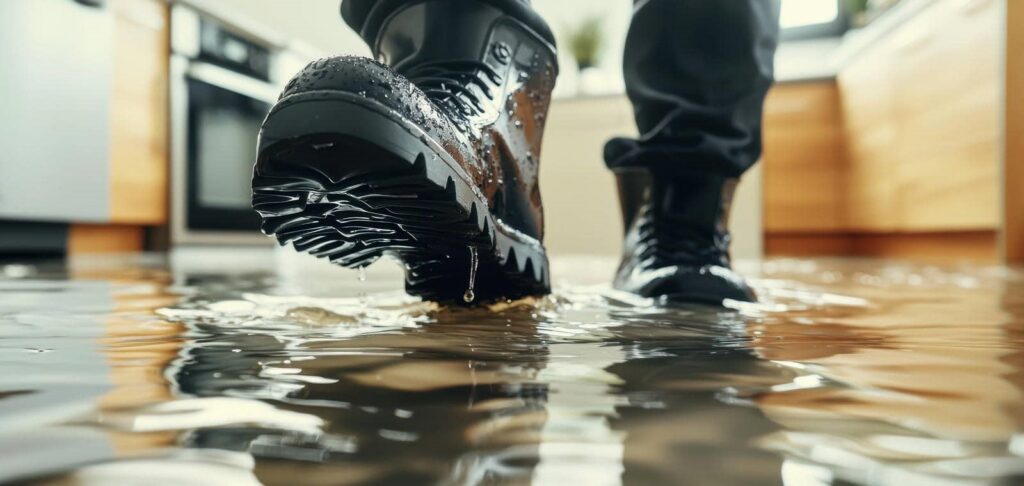
As you assemble your flood cleanup kit, focus on gathering important safety equipment. Start with durable gloves to shield your hands from sharp objects or contaminants. Waterproof boots with good traction will help you navigate slippery surfaces safely.
Don’t forget protective clothing, like coveralls or masks, to guard against harmful substances. Eye protection is critical too, as debris can pose serious risks.
Having a first aid kit on hand is also smart, in case of minor injuries.
Cleanup Process Checklist
After ensuring you have the right safety gear, it’s time to focus on assembling a thorough flood cleanup kit. This kit will be vital for effective flood cleanup strategies and smooth post-flood recovery.
Here’s what you’ll need:
- Protective gear: gloves, masks, and goggles to keep you safe.
- Cleaning supplies: bleach, disinfectants, and sponges for sanitizing affected areas.
- Tools: buckets, mops, and a wet/dry vacuum to help with water removal.
Having these items ready will empower you to tackle the cleanup process confidently.
Protecting Important Documents and Valuables
When flooding threatens your home, protecting important documents and valuables becomes essential. Start by gathering key documents like birth certificates, insurance policies, and financial records.
Use waterproof document storage solutions, such as sealed bags or waterproof containers, to keep these items safe. If possible, create digital copies and store them in a secure cloud service for added protection.
For valuables protection, identify items of sentimental or financial value, such as jewelry, heirlooms, and important electronics. Store these in a secure, elevated location, ideally in waterproof containers.
Consider enlisting the help of family members to ensure all treasured items are accounted for and protected.
Regularly review your storage systems and update your inventory as needed. By taking these proactive steps, you’ll minimize the risk of loss and preserve the belongings that matter most to you during a flood crisis.
Preparing Your Home and Property
As flooding becomes a real threat, taking steps to prepare your home and property can greatly reduce damage and stress.
Here are some essential actions you can take:
Flood barriers installation: Set up barriers around your property to redirect water away from your home.
Landscaping adjustments: Modify your yard’s grading to improve drainage and prevent pooling around your foundation.
Emergency kit preparation: Assemble a kit with essential supplies in case of an evacuation.
Understanding Insurance Coverage for Flood Damage
How well do you understand your insurance coverage for flood damage? It’s essential to know your policy inside and out, especially when disaster strikes. Start by reviewing your coverage limits; this tells you how much you can claim for repairs and losses.
Remember, many standard homeowner policies don’t cover flood damage, so having a separate flood insurance policy is often necessary.
Next, watch out for policy exclusions. These are specific scenarios or damages that aren’t covered, which can leave you vulnerable. For example, damage from slow leaks may not be included, while sudden flooding usually is.
Take the time to clarify these details with your insurance agent; don’t hesitate to ask questions. Understanding your coverage can make a significant difference in your recovery process and offer peace of mind when facing the unexpected.
You’re not alone in this—many are steering through similar concerns, and being informed is your first step toward security.
Learning Safe Cleanup Techniques
Cleaning up after a flood can be overwhelming, but following safe techniques is crucial for your health and well-being. You’re not alone in this; many people face similar challenges.
By practicing safe handling and proper disposal, you can protect yourself and your loved ones. Here are some tips to help you navigate the cleanup:
Wear protective gear: Always use gloves, masks, and boots to shield yourself from contaminants.
Avoid electrical hazards: Confirm all power sources are turned off before wading through water to prevent shock.
Dispose of damaged items properly: Follow local guidelines for disposing of materials that can’t be salvaged, like furniture and drywall.
Knowing When to Call Professionals
After following safe cleanup techniques, you might find yourself facing damage that’s too extensive or complex to handle alone. Recognizing when to call for professional services is essential in ensuring your home’s safety and restoring your peace of mind.
If you notice structural damage, mold growth, or standing water that doesn’t recede, it’s time to seek help. Professionals have the expertise and equipment to tackle these challenges effectively.
Additionally, if the damage affects your electrical systems or poses health risks, don’t hesitate to reach out. It’s okay to ask for support—flood damage can be overwhelming, and you don’t have to face it alone.
Staying Informed During Flood Events
When a flood event occurs, staying informed can make all the difference in your safety and recovery. It’s essential to keep track of flood alerts and access emergency resources to navigate through the challenges effectively.
Here’s how you can stay updated:
Follow local news: Tune into radio, television, or online platforms to receive real-time updates about flood conditions and safety measures.
Utilize mobile apps: Download emergency management apps that provide alerts and resources tailored to your area, ensuring you’re always in the loop.
Connect with community networks: Engage with local organizations or neighborhood groups that share information and support during emergencies.
Frequently Asked Questions
How Can I Prepare My Pets for a Flood Emergency?
To prepare your pets for a flood emergency, create a disaster kit with food, water, medications, and a leash. Familiarize them with safe spaces and practice evacuation routes to ensure everyone’s safety during a crisis.
What Are the Best Materials for Floodproofing My Home?
You’d think floodproofing means just stacking sandbags, right? Instead, invest in flood barriers and waterproof materials like sealants and membranes. They’ll protect your home and give you peace of mind when storms hit.
How Do I Safely Dispose of Contaminated Items After Flooding?
To safely dispose of contaminated waste, wear protective gear, seal items in sturdy bags, and follow local disposal methods. Reach out to your community for guidance; you’re not alone in this challenging process.
Can I Receive Government Assistance for Flood Damage Recovery?
Yes, you can receive federal aid for flood damage recovery. In fact, households affected by disasters obtain some form of disaster relief, helping you rebuild and recover alongside your community’s support.
What Are the Long-Term Health Effects of Floodwater Exposure?
Floodwater exposure can lead to long-term health risks like respiratory issues, skin infections, and gastrointestinal problems. It is crucial to seek medical advice and monitor your health for any symptoms after experiencing flood-related situations.
Review
Preparing for flood damage cleanup isn’t just about having the right tools; it’s about ensuring your safety and peace of mind. By taking proactive steps, you’re not just waiting for the storm to pass—you’re learning to dance in the rain. Keep your emergency contacts handy, know your plan, and stay informed. With the right preparation, you can face the aftermath with confidence and resilience, ready to reclaim your space and start anew.