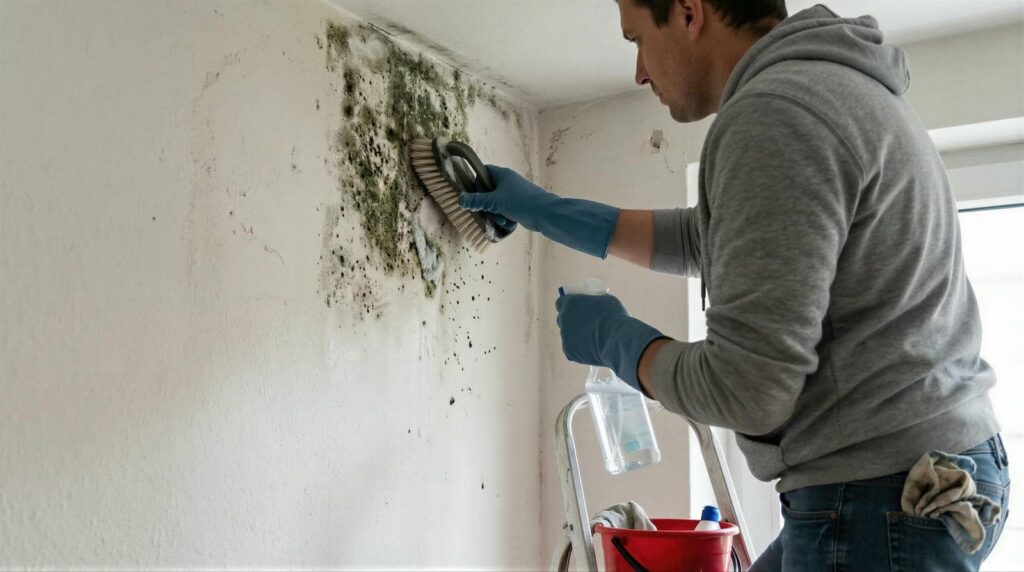
Mold Prevention Strategies for Water-Damaged Homes are essential because mold can begin growing within 24 to 48 hours after water damage. Immediate action, including removing standing water, thoroughly drying affected areas, controlling indoor humidity, and disinfecting surfaces, can significantly reduce the risk of mold growth. Choosing moisture-resistant materials for repairs and addressing hidden moisture also helps create a safer, healthier home while preventing costly long-term damage.
Key Takeaways
- Act swiftly to dry affected areas within 24 to 48 hours to prevent mold growth.
- Use dehumidifiers and fans to lower humidity levels below 60%.
- Inspect and repair hidden leaks immediately to avoid moisture accumulation.
- Apply mold-resistant materials in moisture-prone areas like bathrooms and kitchens.
- Conduct regular maintenance checks on ventilation systems and humidity levels.
Why Immediate Mold Action Is Essential After Water Damage
When water damage occurs, acting quickly is essential to prevent mold growth.
Mold health impacts everyone in your home, especially those with respiratory issues. The longer moisture lingers, the greater the risk of an infestation.
You’ll want to control moisture levels effectively; even small leaks can create an environment ripe for mold.
Next Steps to Prevent Mold Growth
To effectively prevent mold growth, it’s crucial to implement proactive measures immediately after addressing water damage. Start by thoroughly drying affected areas within 24 to 48 hours. Use fans and dehumidifiers to reduce moisture levels, creating an environment that’s less conducive to mold.
Next, inspect for hidden water sources, like leaks or seepage, and repair them promptly. Consider applying mold-resistant products to surfaces prone to moisture, further enhancing your preventive measures.
Regularly monitor humidity levels in your home, keeping them below 60%. Finally, maintain proper ventilation, especially in high-moisture areas like bathrooms and kitchens.
Top Drying Methods to Eliminate Mold Risks
Effective drying methods play an essential role in eliminating mold risks, especially after water damage. To start, dehumidifier usage is important. By lowering humidity levels, you create an environment less conducive to mold growth. Positioning a dehumidifier in affected areas accelerates moisture removal, ensuring surfaces dry quickly.
Additionally, ventilation improvement is significant. Open windows and utilize fans to enhance air circulation, helping to disperse moisture. If possible, consider using exhaust fans in bathrooms and kitchens to further reduce humidity.
Combining these techniques maximizes drying efficiency. Regularly monitor humidity levels to maintain ideal conditions and prevent future mold issues.
Choosing Mold-Resistant Materials for Your Home
Choosing the right materials can greatly reduce the risk of mold growth in your home. Opt for mold-resistant paints, which contain antimicrobial agents that inhibit mold development on surfaces. These paints are particularly effective in high-humidity areas like bathrooms and kitchens.
Additionally, installing moisture barriers is essential; they prevent water vapor from seeping into walls and ceilings, creating an environment conducive to mold. Look for high-quality polyethylene sheets or specialized barrier products designed for residential use.
Implement Regular Maintenance to Prevent Mold
Although it might seem tedious, implementing regular maintenance is essential for preventing mold growth in your home. By staying proactive, you can greatly reduce the risk of mold infestations.
Focus on these key areas:
- Inspect and clean ventilation systems regularly to ensure proper airflow.
- Monitor humidity levels with a hygrometer; aim for 30-60% humidity.
- Address leaks and water damage immediately to prevent moisture accumulation.
Frequently Asked Questions
How Can I Tell if Mold Is Hidden in My Home?
To detect hidden mold, inspect dark, damp areas like basements and behind walls. Look for water stains or musty odors. If unsure, consider hiring a professional for a thorough mold inspection to ensure your home’s safety.
What Are the Health Effects of Mold Exposure?
Mold exposure poses significant health risks, often leading to respiratory issues like asthma, coughing, and irritation. You should be aware of these effects, especially if you or loved ones have pre-existing health conditions.
Can I Remove Mold Myself, or Should I Hire a Professional?
Imagine battling a shadowy creature; you can tackle it yourself, but DIY safety is essential. If the mold’s extensive, hiring a professional might be wiser, ensuring thorough mold removal and protecting your home’s health.
How Long Does It Take for Mold to Grow After Water Damage?
Mold can start growing within 24 to 48 hours after water damage, depending on factors like humidity and temperature. Understanding this mold growth timeline helps you act quickly to prevent further issues in your home.
Are There Specific Climates More Prone to Mold Growth?
Yes, humid environments are more prone to mold growth. When you maintain temperature control, you can reduce humidity levels, helping to minimize mold’s chances of thriving in your living space.
Summary
In the battle against mold, acting swiftly is your best weapon. By drying out affected areas, repairing leaks, and using mold-resistant materials, you can safeguard your home’s health. Think of regular maintenance as your home’s immune system—strong and vigilant. Don’t let mold take root; staying proactive protects your living space and enhances your well-being. Embrace these strategies, and you’ll cultivate a safer, cleaner environment for you and your loved ones.