You might think flood damage cleanup is a hassle, but being prepared can make the process much smoother. By taking proactive steps now, you can greatly reduce the stress and impact of potential flooding. From evaluating your flood risk to gathering essential supplies, there are practical measures you can implement. Understanding your insurance coverage is also vital. Let’s explore how these strategies can help you protect your home and belongings effectively.
Key Takeaways
- Gather essential cleaning supplies like mops, buckets, and disinfectants to efficiently tackle flood damage cleanup.
- Document property conditions by taking clear photographs of affected areas for insurance claims and record-keeping.
- Prepare protective gear such as gloves, masks, and boots to ensure safety during the cleanup process.
- Create an inventory of valuable items, noting their condition and estimated value for insurance purposes.
- Engage professional restoration services for large-scale cleanup and mold remediation to ensure thorough recovery.
Assess Your Flood Risk
Before you can effectively tackle flood damage cleanup, it’s essential to assess your flood risk. Start by researching your area’s flood history; check local government resources or community forums for insight. Understanding past flooding events can give you a clearer picture of potential risks.
Next, conduct a risk assessment of your property. Look for factors like elevation, drainage systems, and proximity to bodies of water. This evaluation will help you identify vulnerable areas in and around your home.
Don’t forget to talk to neighbors and local officials; they can provide valuable information based on their experiences. By gathering this data, you’ll be prepared and foster a sense of community awareness and support.
Create an Emergency Plan
Creating an emergency plan is essential, especially when you live in a flood-prone area. Start by compiling a list of emergency contacts, including family members, neighbors, and local authorities. Make certain everyone in your household knows how to reach these contacts and where to find important documents.
Next, identify evacuation routes ahead of time. Familiarize yourself with multiple paths to safety, so you’re not scrambling when flooding occurs. Discuss these routes with your family, making sure everyone understands them.
You should also designate a meeting place where you can all gather if separated. This way, you’ll have a sense of security in knowing where to find each other.
Finally, practice your plan regularly. By doing so, you’ll build confidence and make sure everyone feels prepared. An effective emergency plan fosters a sense of community and support, making you better equipped to handle flood emergencies together.
Gather Essential Supplies
Before starting your cleanup, you need to gather essential supplies to tackle the flood damage effectively.
Make sure you have necessary cleaning tools like mops, buckets, and disinfectants, along with protective gear such as gloves, masks, and boots to keep yourself safe.
Having these items on hand will streamline the process and help you work more efficiently.
Necessary Cleaning Tools
When dealing with flood damage, having the right cleaning tools on hand is crucial for effective recovery.
Start by gathering basic cleaning equipment like buckets, mops, and brooms to remove standing water and debris. You’ll also need sturdy scrub brushes and sponges for scrubbing surfaces.
Don’t forget high-powered fans and dehumidifiers to dry out affected areas and prevent mold growth. For sanitation, stock up on disinfectants and sanitizing wipes to make sure everything is thoroughly cleaned.
You may also want to have trash bags for disposing of damaged items. Having these essential sanitation products ready will help you tackle the aftermath efficiently and create a safe, clean environment for you and your loved ones.
Protective Gear Essentials
Once you’ve gathered your cleaning tools, it’s time to focus on protective gear to keep yourself safe during the cleanup process.
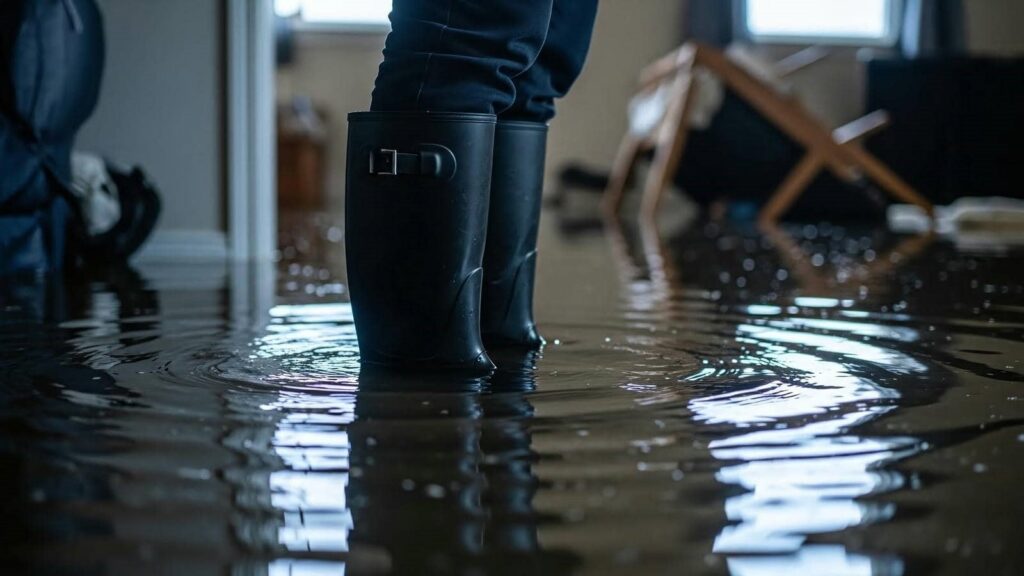
Start with protective gloves to shield your hands from contaminants. Safety goggles are essential for protecting your eyes from debris and chemicals. Don’t forget waterproof boots; they’ll keep your feet dry and safe from sharp objects.
A respirator mask is vital for filtering out harmful particles in the air. If there’s a risk of falling objects, wearing a hard hat will provide added protection.
Finally, have a first aid kit on hand for any minor injuries that may occur. By equipping yourself with the right gear, you’re ensuring a safer, more effective cleanup experience for everyone involved.
Document Your Property
After a flood, it’s essential to document your property for insurance claims and recovery efforts.
Start by taking clear photographs of the damage, capturing every affected area and item.
Then, create an inventory of your valuable belongings, noting their condition and estimated value to support your claim effectively.
Photograph Property Condition
To effectively document your property’s condition after a flood, start by taking clear, thorough photographs of all affected areas. Capture wide shots to show the overall damage and close-ups that highlight specific issues.
This visual evidence is essential for a complete property assessment and will greatly aid in your damage documentation process. Be sure to include every room, exterior spaces, and any personal items impacted by the flood.
Consider taking photos from multiple angles to provide a detailed view. Date your photos and note any relevant details, as this information can be vital for insurance claims and restoration efforts.
Inventory Valuable Items
With your property’s condition well-documented through photographs, the next step is to inventory your valuable items.
Start by listing each item, noting its condition, age, and any distinguishing features. This detailed inventory will aid in item valuation, which is vital for your insurance appraisal.
Don’t forget to include receipts, warranties, or appraisal documents for high-value items like jewelry or electronics.
Organize your inventory by categories, such as furniture, collectibles, and appliances, to make the process more manageable.
If possible, take additional photographs of each item for further documentation.
This thorough record helps in filing claims and ensures you’re adequately compensated for your belongings in case of future incidents.
Know Your Insurance Coverage
How well do you understand your insurance coverage when it comes to flood damage? It’s essential to know the specifics of your insurance policy to ensure you’re protected. Start by reviewing your policy documents, focusing on the coverage limits for flood-related incidents. Many standard homeowners’ policies exclude flood damage, so check if you need separate flood insurance.
Understand the differences between replacement cost and actual cash value—this can greatly impact your financial recovery. For instance, if your coverage limits are low, you mightn’t be able to fully replace your damaged belongings.
Also, familiarize yourself with any deductibles you’ll need to pay before your insurance kicks in. Having this knowledge empowers you to make informed decisions during a crisis.
If you don’t understand something, don’t hesitate to reach out to your insurance agent. Staying informed can make all the difference when disaster strikes.
Establish Communication Channels
When disaster strikes, do you know who to call? Establishing clear communication channels is vital for effective flood damage cleanup. Start by compiling a list of emergency contacts, including family members, neighbors, and local authorities.
Make certain everyone in your household knows who to reach out to during a crisis.
Next, connect with community resources that can provide assistance. Local organizations often offer support services, such as shelters, food banks, and cleanup help.
Consider joining community groups on social media to stay updated on available resources and share information quickly.
Keep your phone charged and have backup power sources ready. If you rely on landlines, make certain your phone number’s updated with emergency services.
Prepare Your Home
To effectively prepare your home for potential flood damage, you need to take proactive steps that minimize risk and assure safety.
Start by evaluating your home’s elevation; if it’s in a flood-prone area, consider elevating your home. This can greatly reduce water damage during floods.
Next, inspect and maintain your drainage systems. Clear gutters, downspouts, and drains of debris to ensure that water flows away from your home.
Installing a sump pump can also be beneficial in keeping your basement dry.
Additionally, create a flood emergency plan with your family, discussing evacuation routes and safety protocols.
Store important documents in waterproof containers and consider flood-resistant materials for your home’s interior.
Stay Informed About Weather Alerts
To effectively manage flood risks, you need to stay updated on local weather conditions.
Regularly monitor weather updates, sign up for alerts, and utilize weather apps to get real-time information.
Being proactive about these alerts can help you respond quickly and minimize potential damage.
Monitor Local Weather Updates
Staying informed about weather alerts is essential during flood season, as conditions can change rapidly and unexpectedly. Regularly check local weather updates to stay ahead of potential flooding.
Utilize reliable sources like the National Weather Service or local news outlets for accurate weather forecasting and timely flood alerts. Consider downloading weather apps that offer real-time notifications, ensuring you won’t miss critical updates.
Be attentive to changes in forecasts, as even a slight shift can escalate danger levels. By staying informed, you’re protecting yourself and fostering a sense of community preparedness.
Share any updates with neighbors or loved ones; together, you can make informed decisions and enhance your safety during these challenging times.
Sign Up for Alerts
How can you ensure you receive timely updates about severe weather conditions? The answer lies in signing up for flood alert systems and emergency notifications.
Many local governments and weather agencies offer these services, sending you real-time alerts directly to your phone or email. By registering, you can stay informed about impending storms, potential flooding, and evacuation orders.
Check your local emergency management website for options, and consider downloading notifications from trusted weather apps. Make sure to customize your alert settings; you want to receive only the most relevant updates, ensuring you’re always prepared.
Staying connected with your community through these alerts fosters a sense of belonging, especially during times of crisis. Your safety is paramount, so don’t wait—sign up today!
Use Weather Apps
Have you ever found yourself caught off guard by sudden weather changes? Staying informed is essential, especially when it comes to potential flooding.
Using a reliable weather app can make a significant difference. Look for weather app features like real-time updates and customizable notifications that alert you about severe weather conditions in your area.
Flood alert notifications can keep you ahead of the storm, allowing you to take necessary precautions before it’s too late. Many apps even provide radar maps to visualize incoming weather patterns, so you can plan accordingly.
Develop a Cleanup Strategy
As you begin the intimidating task of flood damage cleanup, developing a clear strategy is essential to assure efficiency and safety. Start by evaluating the extent of the damage and prioritizing which areas need immediate attention. Use effective flood response tactics, like creating a checklist to track your progress and make certain nothing is overlooked.
Next, gather supplies—mops, buckets, gloves, and disinfectants—before diving into the cleanup. This preparation also includes coordinating volunteers or family members to help. Assign specific tasks to each person, making sure everyone knows their role.
This cleanup coordination strategy not only speeds up the process but also fosters a sense of community.
Finally, keep communication open among your team. Regular check-ins can help address any challenges that arise and keep morale high. With a solid plan in place, you’ll tackle flood damage more effectively and feel more supported in this challenging time.
Seek Professional Help When Needed
Even with a well-organized cleanup strategy, some situations may require professional intervention. When you face extensive damage or health risks, it’s essential to reach out for help. Flood restoration services can provide expertise and resources you mightn’t have.
Here’s when to call in the experts:
Severe Structural Damage: If your home’s foundation or walls are compromised, emergency response teams can assess safety risks.
Mold Growth Risk: Standing water can lead to mold, which poses health hazards. Professionals have the right tools to handle it safely.
Electrical Hazards: If water has come into contact with electrical systems, it’s important to have technicians address it to prevent shocks or fires.
Large-Scale Cleanup: For extensive flooding, a team can expedite the cleanup, ensuring thoroughness and efficiency.
Frequently Asked Questions
How Can I Safely Dispose of Contaminated Materials After a Flood?
To safely dispose of contaminated waste after a flood, wear protective gear, seal materials in plastic bags, and follow local guidelines for hazardous waste disposal. Don’t forget to contact local authorities for assistance and resources.
What Are the Signs of Mold Growth After Flooding?
You’ll notice mold growth by its musty smell, discoloration on surfaces, or fuzzy patches. Identifying mold quickly is essential; it poses serious health risks, affecting your well-being and sense of belonging in your own home.
How Long Should I Wait to Start Cleanup After a Flood?
You should start cleanup within 24 to 48 hours after a flood to minimize damage. Prioritize safety during your flood recovery timeline by wearing protective gear and ensuring structural integrity before entering affected areas.
Can I Claim Flood Damage on My Taxes?
Yes, you can claim flood damage on your taxes. If you have flood insurance, you might qualify for tax deductions. Keep detailed records of your losses to maximize your potential benefits when filing your tax return.
What Should I Do if I Have No Insurance Coverage for Flooding?
If you have no insurance for flooding, explore flood assistance programs and various financial aid options. Surprisingly, few flood victims receive federal aid, so don’t hesitate to seek help from local organizations.
Final Thoughts
In the face of rising waters, preparation is your lifeboat. By evaluating risks, gathering supplies, and staying informed, you’re not just protecting your home; you’re building a fortress against chaos. Each step you take is a brick in that wall, fortifying your safety. Remember, when floodwaters threaten, your knowledge and readiness can be your guiding light. Embrace these tips, and you’ll navigate the storm with confidence, ensuring a smoother recovery when the waters recede.