Imagine a ship maneuvering through a storm, relying on a sturdy hull and well-prepared crew. Just like that vessel, your business must be equipped to handle the unpredictable nature of floods. Evaluating risks, developing response plans, and training staff are critical steps. But are you truly ready for the challenge that a flood can bring? Understanding the nuances of effective flood response strategies could be the difference between recovery and loss.
Key Takeaways
- Conduct thorough risk assessments and flood mapping to identify vulnerabilities and develop tailored emergency response plans for your business.
- Establish a clear communication strategy that utilizes multiple channels for timely updates and encourages employee feedback during a crisis.
- Regularly train employees on emergency protocols, safety equipment usage, and conduct evacuation drills to enhance preparedness and confidence.
- Implement preventative measures like flood barriers and updated drainage systems while securing essential supplies for effective response during a flood.
- Collaborate with local emergency services for coordinated response efforts and conduct joint drills to improve inter-agency communication and efficiency.
Assessing Flood Risks for Your Business
When you think about the potential impact of flooding on your business, it’s essential to assess the risks thoroughly, as understanding these vulnerabilities can help you implement effective strategies for protection.
Start with flood mapping, which provides vital insights into areas most prone to flooding. By identifying these risk zones, you can better evaluate how flood events might disrupt your operations.
Conducting a detailed risk assessment allows you to pinpoint specific threats to your assets, inventory, and personnel. It’s not just about the physical space; consider the emotional toll on your team and community.
By involving your employees in this process, you foster a sense of belonging and shared responsibility.
Ultimately, knowing where your business stands regarding flood risks empowers you to make informed decisions, safeguarding your bottom line and the well-being of your team and clients.
Developing a Comprehensive Emergency Response Plan
As you prepare for potential flooding, developing a thorough emergency response plan is essential for minimizing disruption and ensuring safety.
Start with a detailed risk assessment to identify vulnerabilities within your business. Involve your team in this process; their insights can reveal blind spots you might overlook.
Next, outline clear procedures for various scenarios, from evacuation routes to resource allocation. Make sure everyone understands their roles to foster a sense of belonging and teamwork during a crisis.
Once you’ve drafted the plan, conduct regular plan evaluations to verify its effectiveness. Update it based on new risks or changes in your business environment.
This proactive approach enhances safety and builds confidence within your team. By prioritizing a solid emergency response plan, you’re safeguarding your assets and nurturing a resilient community that can face challenges together.
Establishing a Communication Strategy
How can you ensure that everyone stays informed and connected during a flood crisis? Establishing a robust communication strategy is essential. Start by identifying key channels for crisis messaging—text alerts, emails, and social media can reach your stakeholders swiftly.
Make sure your messages are clear, consistent, and empathetic, addressing concerns while providing factual updates.
Engage stakeholders by encouraging two-way communication. Create platforms for employees to voice their worries, ensuring they feel heard and valued. This connection fosters a sense of belonging, which is vital during uncertain times.
Regular updates should be part of your strategy, even if there’s no new information. Consistency reassures everyone involved.
Consider designating a crisis communication team tasked with monitoring the situation and disseminating information. This proactive approach keeps everyone informed and strengthens relationships, making your organization more resilient in the face of adversity.
Training Employees for Flood Situations
Training your employees for flood situations is vital to ensuring their safety and the efficiency of your response efforts.
By focusing on emergency response protocols, the proper use of safety equipment, and the importance of evacuation drills, you can prepare your team to act decisively when faced with a flood.
This proactive approach safeguards lives and reinforces a culture of preparedness within your organization.
Emergency Response Protocols
While floods can strike with little warning, having well-defined emergency response protocols in place can greatly enhance your team’s preparedness.
Start by conducting a thorough risk assessment to identify vulnerabilities specific to your business location. This knowledge allows your team to develop tailored strategies that foster a sense of security among employees.
Regular training sessions focusing on crisis management will empower your staff, ensuring everyone knows their roles during a flood event. Encourage open discussions about safety concerns, fostering a culture of belonging and support.
By equipping your team with the right tools and knowledge, you create a resilient workforce ready to face potential crises, minimizing panic and confusion when it matters most.
Your proactive approach will make a difference.
Safety Equipment Usage
Equipping your team with the right safety equipment is an essential step in flood preparedness. Start by ensuring everyone understands how to use safety gear effectively. Regular training sessions help foster a sense of belonging and responsibility among employees.
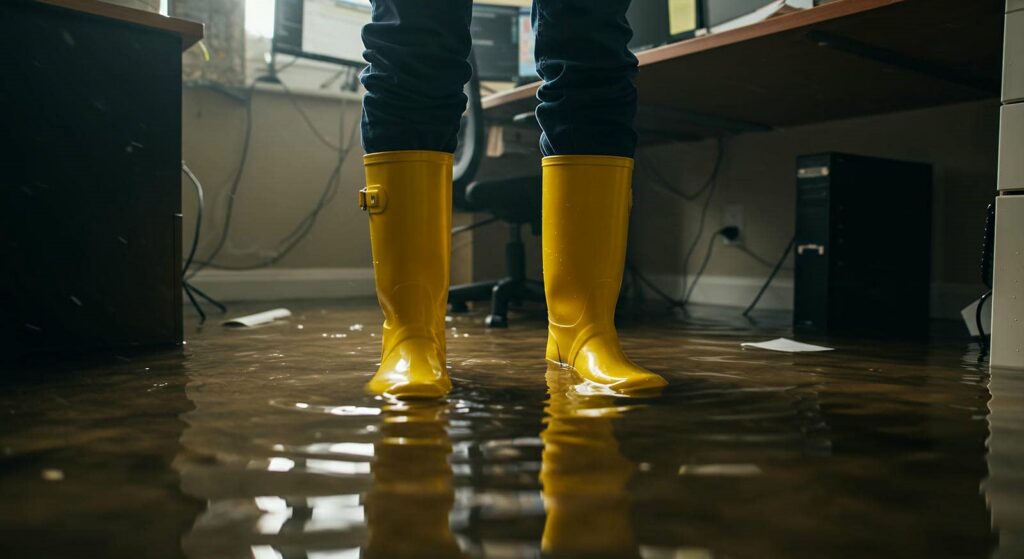
Discuss the importance of personal protective equipment, like waterproof boots and life jackets, to instill confidence in their safety during emergencies.
Don’t overlook equipment maintenance; regularly check and replace any worn-out safety gear. This proactive approach protects your team and reinforces a culture of care and preparedness.
Evacuation Drills Importance
How prepared is your team to respond swiftly during a flood emergency? Conducting regular evacuation drills is essential for building confidence and ensuring everyone knows their evacuation routes.
With the right training, your employees will feel more secure and connected to their workplace community.
Consider these key factors for effective drills:
- Familiarity: Regular practice helps employees know evacuation routes by heart.
- Confidence: Frequent drills reduce panic and increase decision-making speed during emergencies.
- Team Cohesion: Drills foster teamwork, strengthening bonds among staff.
- Feedback: Use each drill as an opportunity to gather insights and improve procedures.
Implementing Preventative Measures
When communities take proactive steps to implement preventative measures against flooding, they safeguard their infrastructure and protect the well-being of their residents.
You can start by conducting risk assessments to identify vulnerable areas within your business. Investing in flood barriers and upgrading drainage systems can greatly reduce water damage. Ensure your infrastructure meets updated building codes and integrate landscaping strategies to enhance natural water absorption.
Additionally, it’s essential to review your insurance coverage to make sure it addresses flood-related losses adequately. Employee training on emergency protocols will empower your team, while maintaining an updated supply inventory ensures readiness.
Embracing technology solutions, such as advanced weather monitoring systems, will keep you informed and prepared. By taking these strategic steps, you’ll foster a sense of belonging within your community, building resilience against flooding together.
Collaborating With Local Emergency Services
To effectively respond to floods, you need to establish clear communication protocols with local emergency services.
Joint training exercises can enhance coordination and preparedness, ensuring everyone knows their role when disaster strikes.
Additionally, resource-sharing agreements can maximize your community’s capabilities and strengthen the overall response effort.
Establish Communication Protocols
Establishing effective communication protocols with local emergency services is essential for coordinating a timely and organized flood response.
By fostering strong relationships, you can enhance your crisis communication and ensure stakeholder outreach remains consistent during emergencies.
Here are key steps to implement:
- Identify key contacts within local emergency services for immediate access.
- Establish communication channels (like email, phone, and messaging apps) to facilitate quick updates.
- Share relevant information about your business operations to help emergency services prioritize their response.
- Plan regular check-ins to maintain open lines of communication and adapt to evolving situations.
Joint Training Exercises
Collaborating with local emergency services through joint training exercises strengthens your response capabilities and fosters a sense of unity among all stakeholders involved.
By participating in these joint training sessions, you enhance inter-agency collaboration, ensuring everyone understands their roles during a flood crisis. You’ll build trust and open lines of communication, which are essential in high-pressure situations.
These exercises provide a platform to address challenges, improve coordination, and develop strategies tailored to your community’s unique needs. Remember, the goal is to create a seamless response effort, where businesses and emergency services work hand-in-hand.
Embracing this collaborative spirit prepares your organization and contributes to a resilient community, where everyone feels a sense of belonging and support.
Resource Sharing Agreements
While maneuvering through the complexities of flood response, having resource sharing agreements in place can greatly bolster your community’s resilience.
By collaborating with local emergency services, you enhance resource allocation and ensure mutual assistance during crises. These agreements foster trust and create a network of support that can save lives and property.
Consider establishing agreements that focus on:
- Equipment sharing (e.g., pumps, generators)
- Personnel coordination (e.g., volunteers, first responders)
- Information exchange (e.g., real-time updates, safety protocols)
- Financial support (e.g., funding for joint initiatives)
Securing Essential Supplies and Equipment
To effectively respond to flooding, securing essential supplies and equipment is crucial, as these resources can greatly impact your ability to manage the situation.
Start by evaluating your emergency inventory; verify it includes items like sandbags, first aid kits, and cleaning supplies. Building relationships with local suppliers can strengthen your supply chain, making it easier to access what you need quickly.
Consider creating a buddy system with neighboring businesses to share resources during crises. This not only enhances your inventory but fosters a sense of community.
As you plan, think strategically about potential shortages and prioritize critical items that will support both your operations and your employees’ safety.
Conducting Regular Drills and Simulations
Regularly conducting drills and simulations is essential for ensuring your team is prepared to respond effectively to flooding. By embracing flood simulation techniques, you foster a culture of readiness and resilience within your organization.
These exercises enhance response team coordination and build confidence among team members.
Consider incorporating the following elements in your drills:
- Realistic Scenarios: Use varied flood situations to challenge your team.
- Clear Roles: Define responsibilities to streamline coordination and minimize confusion.
- Communication Protocols: Practice effective messaging to ensure everyone stays informed.
- Feedback Loops: Encourage team members to share insights post-simulation for continuous improvement.
Evaluating and Improving Response Strategies
After conducting drills and simulations, it’s essential to assess how well your team responded and identify areas for improvement.
Begin with a thorough risk assessment to understand vulnerabilities and potential impacts on your operations. This insight will guide your strategy evaluation, allowing you to pinpoint effective practices and those that need refinement.
Encourage open dialogue among your team members; their perspectives can reveal hidden challenges and innovative solutions. Use feedback to foster a culture of continuous improvement, where everyone feels valued and heard.
Consider developing a checklist based on your evaluations to streamline future responses.
Frequently Asked Questions
What Insurance Coverage Is Essential for Flood-Related Damages?
You need adequate flood insurance and should explore various coverage options. This ensures your business can recover swiftly after damages. Prioritize understanding your policy to protect your assets and support your team’s stability during challenging times.
How Can Businesses Recover Financially After a Flood?
You can recover financially after a flood by implementing strategic financial planning and recovery strategies. Assess damages, file insurance claims promptly, and explore grants or loans, fostering resilience and community support for a stronger comeback together.
What Government Assistance Is Available for Flood-Affected Businesses?
You can access federal grants and disaster loans to help your business recover. These resources provide essential financial support, enabling you to rebuild and regain stability while connecting you with a network of others facing similar challenges.
How Can Businesses Effectively Communicate With Customers During a Flood?
In a swirling storm, you’ll keep your customers informed through timely updates, utilizing crisis communication strategies. Share transparent, empathetic messages to reassure them, creating a sense of belonging even amid uncertainty. Stay connected; they’ll appreciate it.
What Technology Can Help Monitor Flood Risks in Real-Time?
You can utilize real-time sensors and flood mapping technology to monitor risks effectively. These tools help you stay informed, enabling proactive decisions that protect your community and create a sense of belonging during challenging times.
Conclusion
In steering through the unpredictable waters of flood preparedness, your proactive approach can make all the difference. By evaluating risks, developing response plans, and training your team, you’re not just safeguarding assets; you’re nurturing a culture of safety. Remember, when the storm hits, it’s about surviving and thriving. Like a sturdy ship in turbulent seas, your business can weather any storm with the right strategies in place, ensuring both employee safety and operational resilience.