Many homeowners underestimate how quickly ceiling water damage can escalate into a costly repair. Factors like the extent of the damage, the materials involved, and local labor rates all play significant roles in determining your expenses. Additionally, pre-existing issues like mold can complicate matters. Understanding these elements is vital if you want to manage costs effectively and ensure proper repairs. Are you prepared to navigate the complexities of this process?
Key Takeaways
Extent of Damage: Assess whether the ceiling has minor stains or extensive structural issues to accurately gauge repair costs.
Material Choices: Drywall is typically cheaper than plaster, affecting overall expenses based on the material selected for repairs.
Labor Rates: Repair costs can vary significantly by location, so obtaining multiple quotes from skilled professionals is essential.
Insurance Coverage: Contact your insurance provider to understand potential coverage, which can reduce out-of-pocket expenses for repairs.
Preventative Measures: Regular inspections and timely repairs can prevent worsening damage and higher costs in the future.
Factors Influencing Ceiling Water Damage Repair Costs
When you face ceiling water damage, several factors can greatly impact repair costs. First, the extent of the damage plays an essential role; minor issues might be manageable through DIY repairs, while extensive damage often requires professional intervention.
Moreover, the type of materials involved—like drywall or plaster—affects pricing, as some materials are more costly to replace. Additionally, you’ll want to reflect on whether you’re filing insurance claims; having coverage can greatly reduce out-of-pocket expenses.
Your location also influences labor rates, which can vary by region. Finally, any pre-existing conditions, such as mold, may escalate costs. Understanding these factors helps you make informed decisions, ensuring you stay within budget while restoring your home.
Assessing Ceiling Water Damage Extent
Evaluating the extent of ceiling water damage is essential for effective repairs. You need to conduct a thorough damage assessment to understand the situation fully. Here’s what to focus on:
- Identify the water source and stop it.
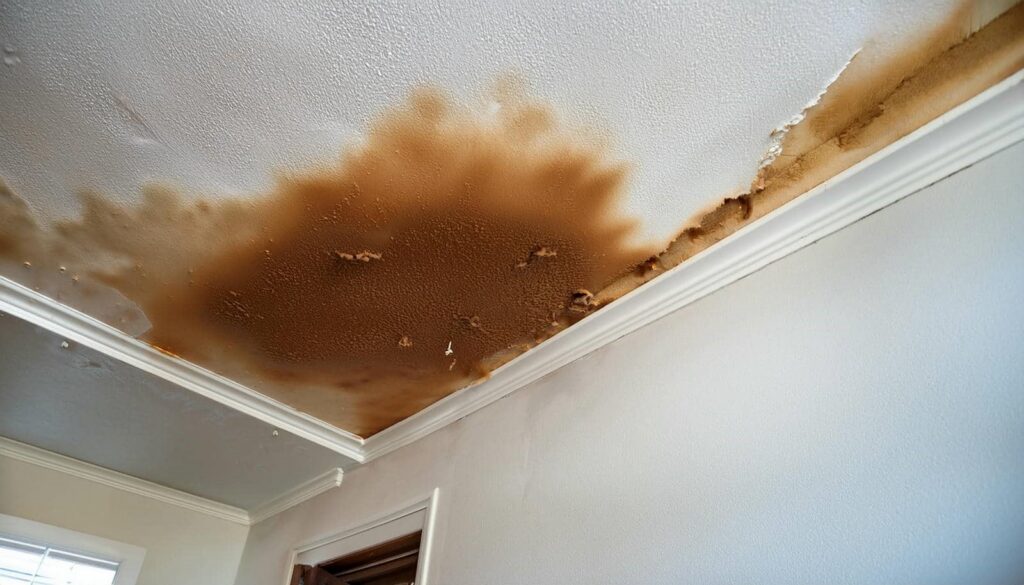
- Check for visible stains or sagging areas.
- Assess surrounding structures for potential damage.
- Determine if mold has started to develop.
These steps will guide your repair process, ensuring you address the symptoms and the root cause of the damage.
Knowing how extensive the damage is helps you plan repairs accurately and avoid further complications. By taking these actions, you’ll protect your home and restore it to its original condition effectively.
Understanding Material and Labor Costs
Understanding the costs associated with materials and labor is essential for any ceiling water damage repair project. Different material types, such as drywall, ceiling tiles, or plaster, can greatly affect your overall expenses.
For instance, while drywall might be cheaper, plaster offers better durability but comes at a higher price.
Labor rates also vary, influenced by your location and the complexity of the job. Skilled professionals may charge more, but their expertise can save you money in the long run by ensuring a quality repair.
It’s vital to get multiple quotes, so you understand the range of material and labor costs involved. By doing this, you’ll make informed decisions that align with your budget and project needs.
Top Mistakes That Raise Repair Costs
Neglecting to address underlying issues can significantly inflate your repair costs. Many homeowners fall prey to common misconceptions, thinking that quick fixes will suffice.
However, overlooking the root cause of water damage only leads to recurring problems and higher expenses.
Here are some top mistakes to avoid:
- Ignoring signs of leaks or mold
- Skipping preventative measures like regular inspections
- Relying on DIY solutions instead of consulting professionals
- Delaying repairs, which can worsen damage
How to Navigate the Ceiling Water Damage Repair Process?
When you discover ceiling water damage, addressing it promptly can save you time and money in the long run.
Start by evaluating the extent of the damage; small leaks may be manageable with DIY repairs, while significant issues often require professional help.
Document the damage thoroughly for your insurance claims—photos and detailed descriptions can expedite the process.
Next, contact your insurance provider to understand your coverage and initiate your claim.
If you choose to tackle DIY repairs, make sure you have the right materials and tools, but don’t hesitate to consult experts if you’re unsure.
Maneuvering this process effectively restores your ceiling and fosters a sense of community support as you share your experiences with others facing similar challenges.
Frequently Asked Questions
How Can I Prevent Future Ceiling Water Damage?
You can prevent future ceiling water damage by scheduling regular maintenance and implementing leak detection systems. Inspect plumbing and roofing frequently, and address any issues promptly to protect your home and maintain its value.
Will My Insurance Cover Ceiling Water Damage Repairs?
Your insurance policies may cover ceiling water damage repairs, but it depends on your coverage limits and the cause of the damage. Review your policy details and consult with your insurer to clarify your coverage.
How Long Does the Repair Process Typically Take?
The repair timeline typically ranges from a few days to several weeks, depending on the extent of damage assessment. Quick evaluations and repairs can minimize disruption, helping you restore your space efficiently and effectively.
Can I Do the Repairs Myself?
You can tackle DIY repairs if you assess the damage first. Gather repair tools, choose appropriate ceiling materials, and ensure you follow safety precautions. Cost estimates can help you budget effectively for the project.
What Signs Indicate Ongoing Water Damage Issues?
You should look for water stains, peeling paint, or mold growth. Conduct leak detection and moisture assessment to identify hidden issues. These signs indicate ongoing problems that need immediate attention to prevent further damage.
Final Thoughts
In managing ceiling water damage repairs, being informed can save you both time and money. By understanding the factors influencing costs and avoiding common pitfalls, you can ensure a smoother repair process. Remember, getting multiple quotes and consulting professionals can enhance the quality of repairs and help you manage expenses effectively.